Infant Sign Language
Spooky Fun with Baby Signs®: Celebrating Halloween Together!
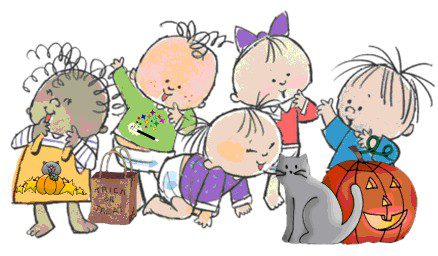
Halloween is just around the corner, and it’s the perfect time to introduce your little one to the magic of the Baby Signs® Program in a fun and festive way! Baby Signs® can enhance communication with your baby, allowing them to express themselves before they can even talk. This Halloween, let’s explore how you can…
Read MoreTina Cavanaugh: Certified Baby Signs® Instructor from Austin, TX
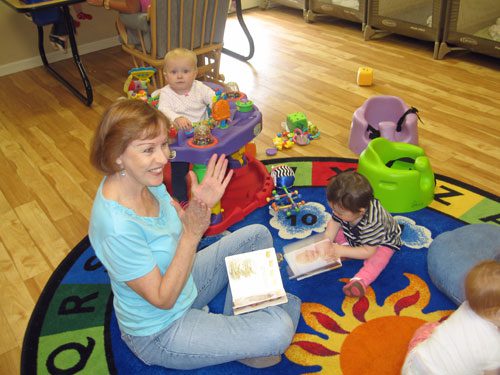
In the bustling city of Austin, Texas, where the culture is as diverse as the food scene, there’s one woman who stands out for her unique and impactful work. Meet Tina Cavanaugh, a certified Baby Signs® Instructor who has been changing the lives of infants and their caregivers for over a decade. The Journey to…
Read MoreKeeping the Bough from Breaking: Signing and Attachment
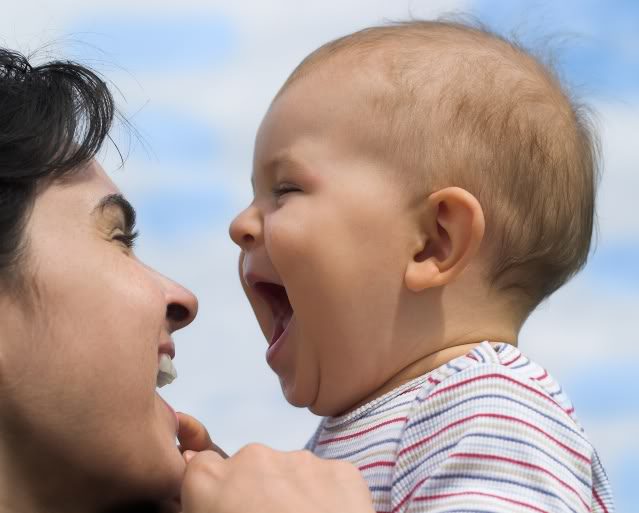
By Linda Acredolo, Ph.D, co-founder of the Baby Signs® Program What do you think is the optimal age for a child to be adopted? If you’re like most people, your answer is “at birth.” It just seems like common sense to us today. Unfortunately, however, for centuries of adopted children that was not the typical…
Read MoreHelping Toddlers at a “Loss for Words”: The Baby Signs® Program and Social Development
By Linda Acredolo, Ph.D. and Susan Goodwyn, Ph.D. Co-founders, The Baby Signs® Program Every parent wants his or her child to enjoy other people and to be well-liked. In Developmental Psychology, we include both these goals under the term “social development.” Although most parents are aware that innate differences in temperament contribute importantly to individual…
Read MoreLate-Talking Toddlers: How the Baby Signs® Program Can Help
By: Catherine Brown, M.A., CCC-SLP Speech-language pathologists refer to children as “late-talkers” when they are slower to develop verbal/expressive skills than their peers even though they have very good receptive (language comprehension) skills. This pattern distinguishes them from “language-impaired” children who have significant deficits in both language comprehension and production. In contrast to language-impaired children,…
Read MoreUsing Infant Sign Language in Multilingual Classrooms
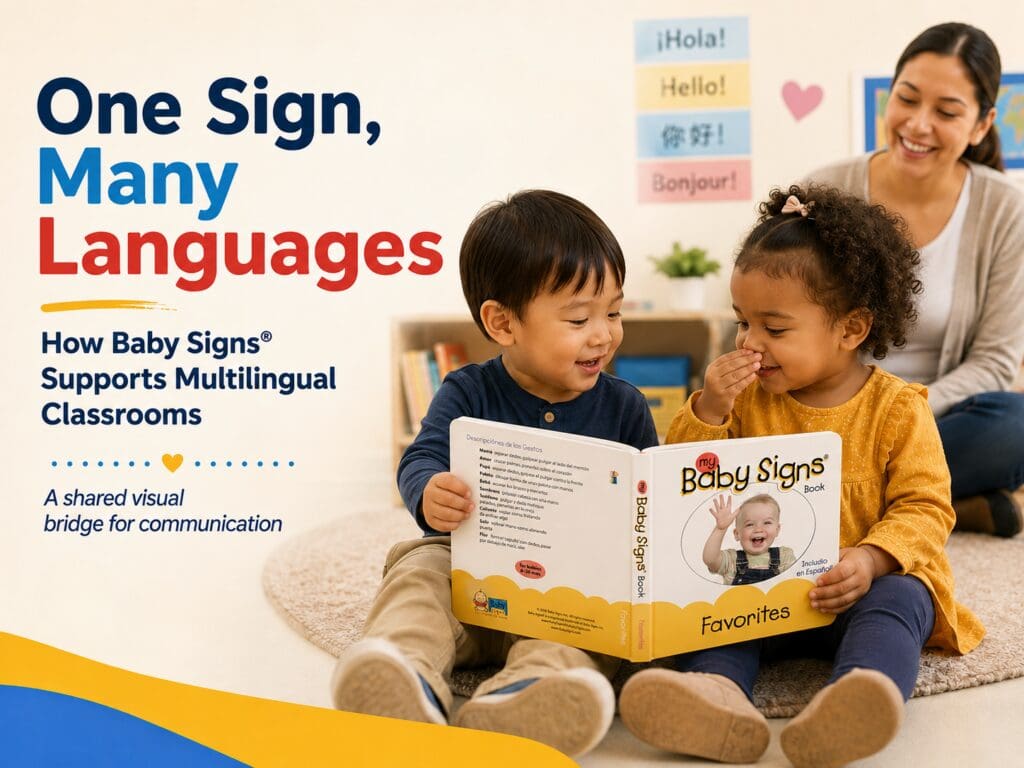
Originally written by Dr. Linda Acredolo, this article explores how Baby Signs® can help babies and toddlers connect words, caregivers, and classroom experiences across multiple spoken languages.
Read MoreThe Baby Signs® Program: A Helpful Tool in Bilingual Settings
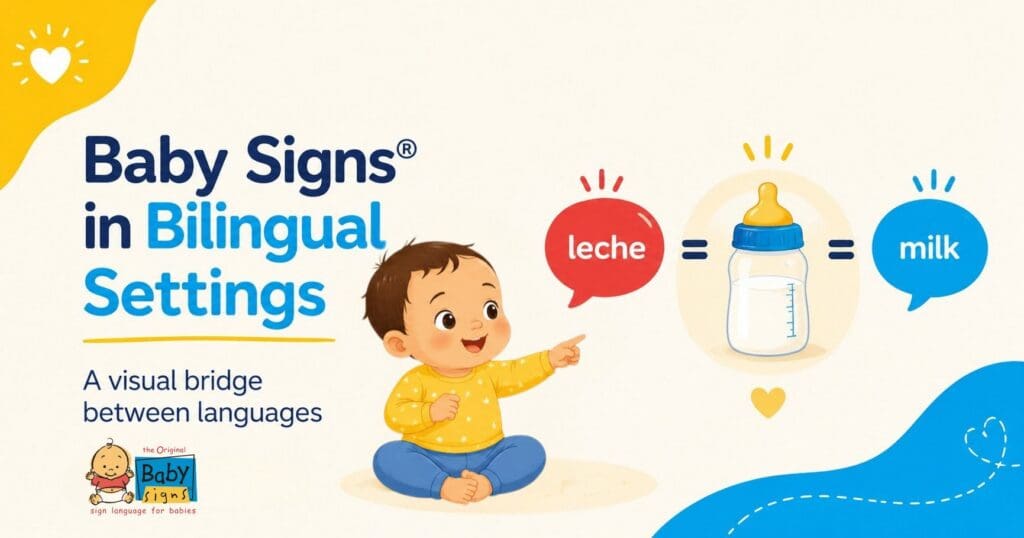
Baby Signs® can help bilingual babies connect words from different languages to the same meaning through simple visual signs.
Read MoreEnhancing Communication and Development
The Baby Signs® Program in Child Development Centers In the ever-evolving landscape of early childhood education, innovative programs are continuously being explored to support children’s growth and development. One such program gaining recognition is the Baby Signs® Program, a communication tool that uses basic sign language with babies. Its implementation in child development centers has…
Read MoreInfant Sign Language and Learning to Talk
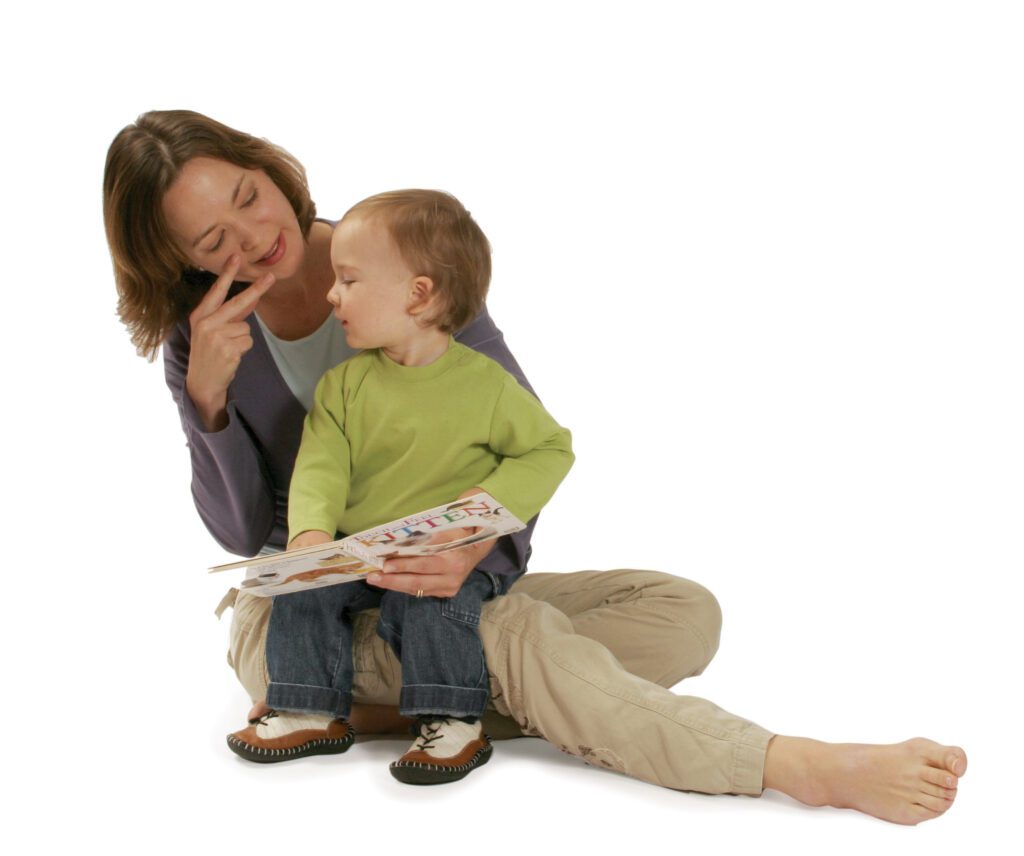
By far the most frequently voiced concern about encouraging babies to use signs to communicate before they can talk is that doing so will slow down verbal development. In fact, the exact opposite is true. Using sign language actually speeds up the process. How do we know? With a grant from the federal government, Drs.…
Read MoreInfant Sign Language: A Helpful Tool for Communication
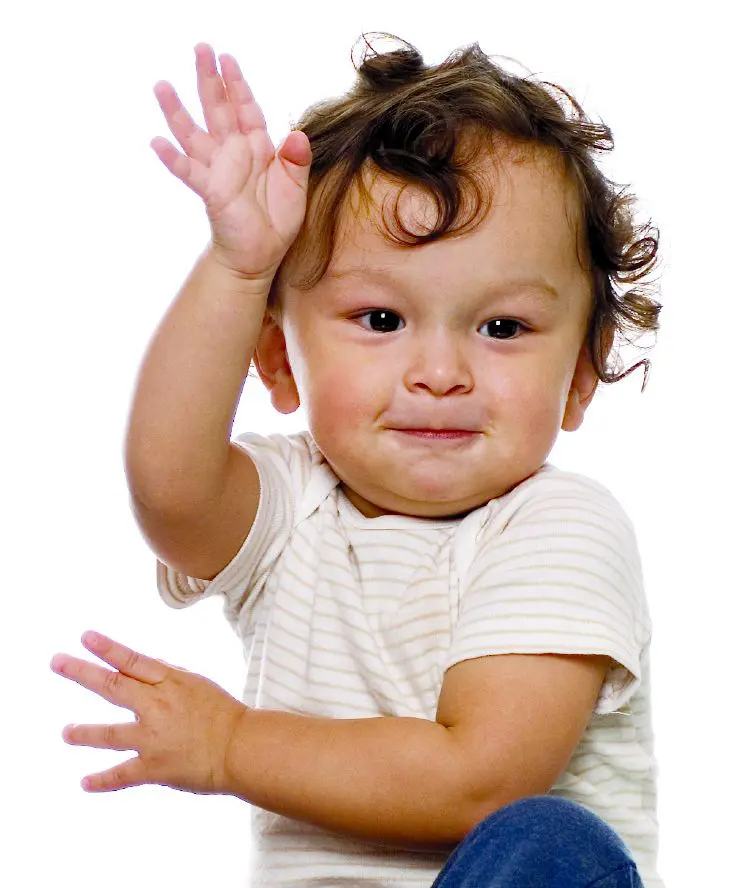
Infant sign language is a way for babies and toddlers to communicate before they are able to speak. It can be a helpful tool for both babies and parents, as it can help to reduce frustration and promote bonding. Babies are born with the ability to learn language, and they can start to learn signs…
Read More