Baby Safety Signs: Help Babies Communicate Before They Can Talk
How Baby Signs® Can Help Babies Learn Safety Words Before They Can Talk
June is National Safety Month, a helpful reminder that safety learning starts early. Babies and toddlers are naturally curious. They want to touch, taste, climb, explore, and imitate everything they see. While that curiosity is an important part of learning, it also means caregivers need simple, clear ways to communicate important safety messages.
The Baby Signs® Program gives families and educators a powerful tool for doing just that. By teaching babies simple signs for words like HOT, STOP, WAIT, GENTLE, WASH, and HURT, adults can help little ones begin to understand safety concepts before they are able to say the words out loud.
Baby sign language does not replace supervision, boundaries, or safe environments, but it can support them. When used consistently during everyday routines, safety signs help babies connect words, actions, and meaning in real-life situations.
Why Teach Safety Signs to Babies?
Long before babies can speak clearly, they are learning from the words, gestures, facial expressions, and routines around them. Signs give babies a visual and physical way to understand important messages.
Safety signs can help babies and toddlers:
- Understand simple safety words before they can say them
- Communicate discomfort, pain, or concern
- Respond to familiar routines and reminders
- Build trust with caregivers through clear communication
- Feel more confident as they learn what to do in everyday situations
For example, when a caregiver signs HOT near a warm bowl of food, a stove, or a sunny car seat buckle, the baby begins to connect the sign, the word, and the experience. Over time, that repeated connection helps the child understand that “hot” means something needs caution.
Essential Baby Signs® Safety Signs to Teach
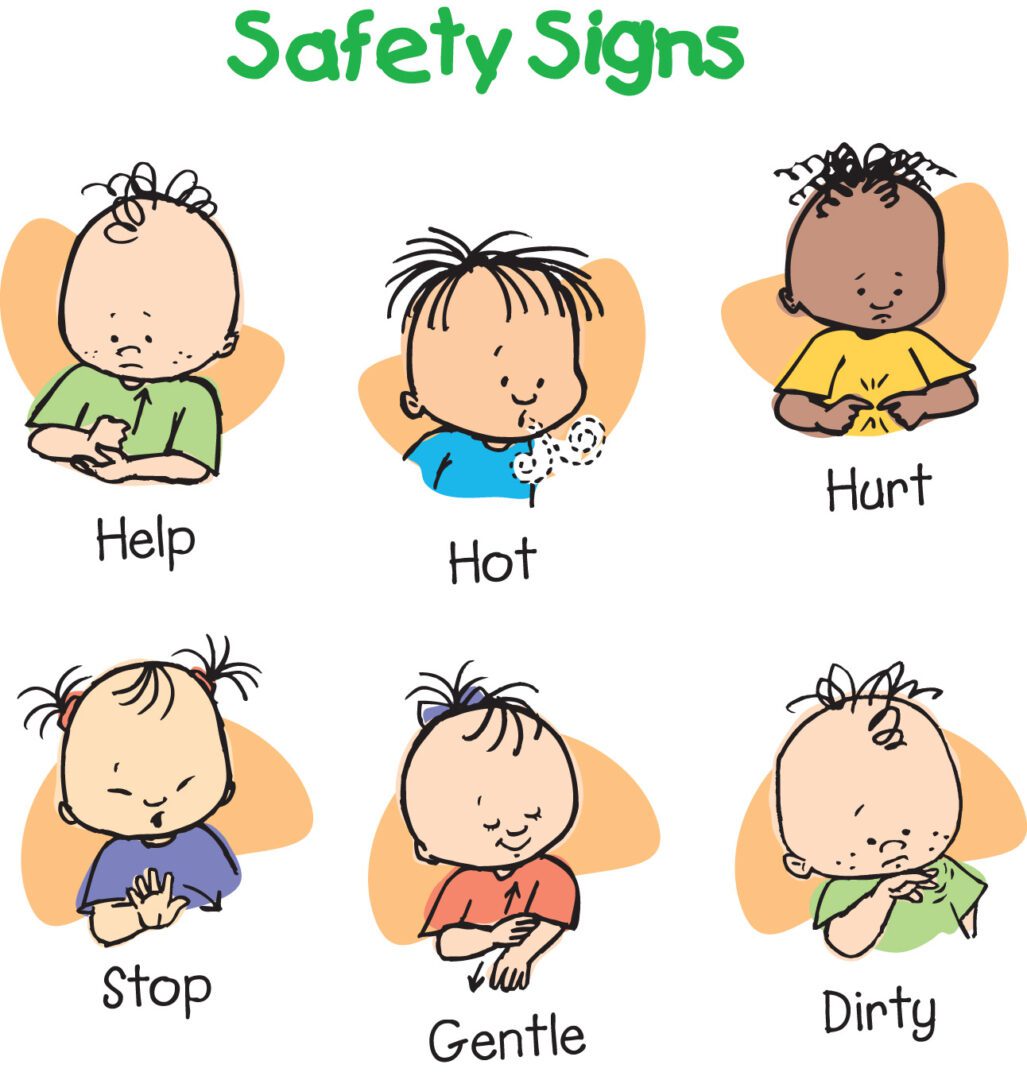
Here are some of the most helpful safety-related signs to introduce during daily routines.
HOT
Use the sign HOT around warm food, stoves, heaters, bath water, sidewalks, playground equipment, or anything that could be too warm to touch.
This sign is especially useful because babies often want to touch before adults have time to explain. A clear sign paired with a calm voice can help reinforce the message.
Try saying and signing:
“Hot. That is hot. We do not touch.”
STOP
The sign STOP can be used when a child needs to pause an action, move away from something unsafe, or wait before running ahead.
Use it during moments such as:
- Approaching a street or driveway
- Getting too close to a pet’s food bowl
- Reaching for an unsafe object
- Climbing on furniture
- Moving too quickly in a crowded space
WAIT
WAIT is a helpful sign for building patience and safety awareness. It gives babies and toddlers a clear message when they need to pause before doing something.
Use WAIT before crossing a street, opening a door, getting out of a car seat, or reaching for food that is not ready yet.
GENTLE
The sign GENTLE is especially useful with pets, babies, friends, and fragile objects. It helps children learn how to use soft hands and kind touch.
Use this sign when your child is petting an animal, touching a baby, holding a book, or playing with another child.
Try saying and signing:
“Gentle. Soft hands.”
WASH
The sign WASH supports healthy routines such as handwashing, bath time, and cleaning up after messy play.
Because handwashing happens many times a day, this is an easy sign to practice often. Repetition helps babies learn.
Use WASH before meals, after diaper changes, after outdoor play, and after sneezes or messy activities.
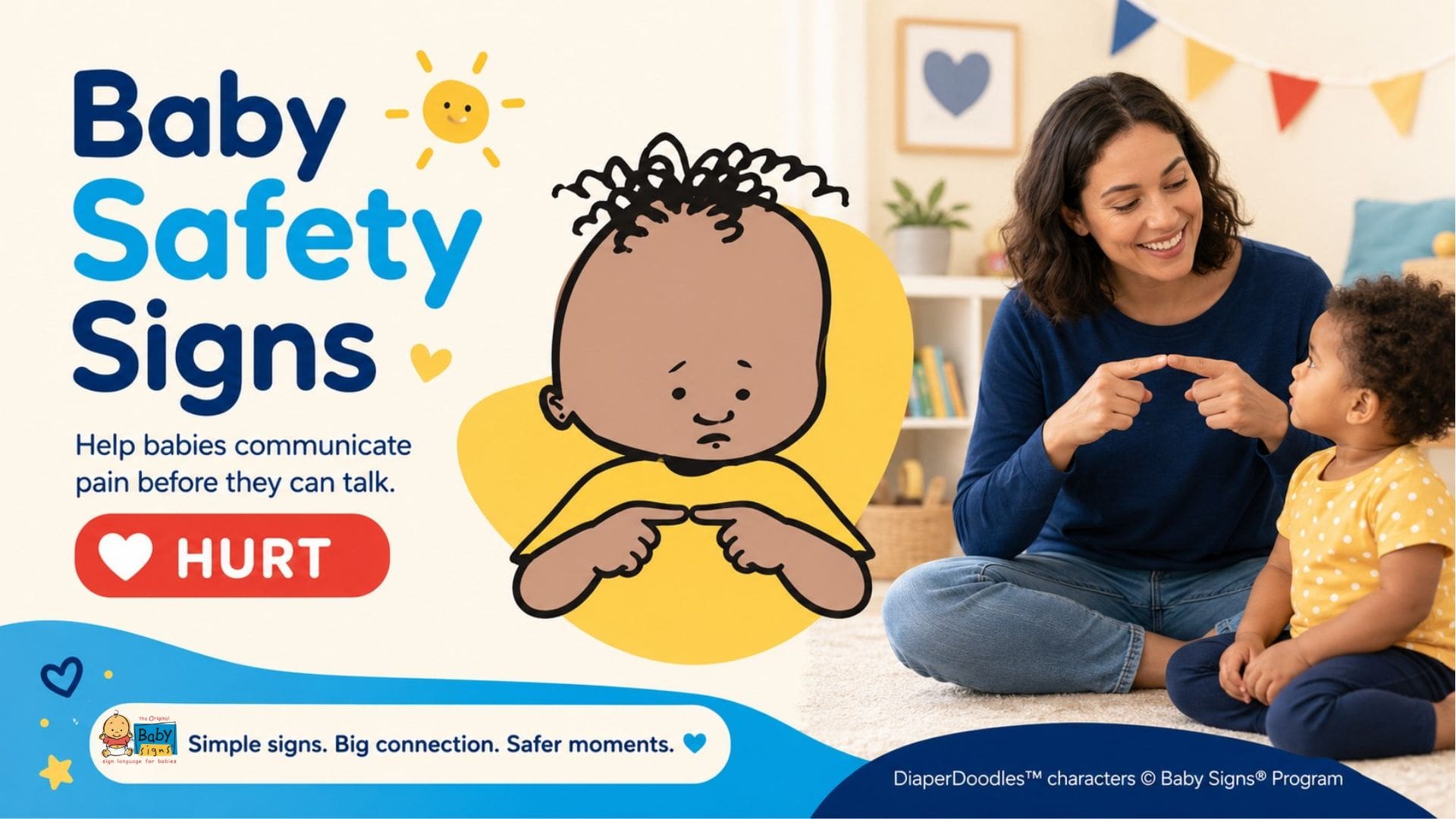
HURT
The sign HURT gives babies and toddlers a way to tell caregivers something is wrong. This can be especially helpful when a child is upset but cannot yet explain what happened.
A child may use HURT to show that they bumped their head, scraped a knee, have a sore spot, or need comfort.
When your baby signs or responds to HURT, you can gently ask:
“Hurt? Show me where it hurts.”
How to Use Safety Signs in Everyday Routines
The best way to teach safety signs is to use them naturally during real-life moments. You do not need to set aside special lesson time. Babies learn best through repetition, routines, and warm interaction.
Start with a few signs
Choose two or three signs that are most useful in your home or classroom. For many families, HOT, STOP, and HURT are a great place to begin.
Say the word while you sign
Always pair the sign with the spoken word. This helps your baby connect the sign, the sound, and the meaning.
For example:
“Hot. The food is hot. Let’s wait.”
Use signs consistently
Use the same sign in the same types of situations. Repetition helps babies understand what the sign means and when to use it.
Keep your tone calm and clear
Safety moments can feel urgent, but babies learn best when adults use calm, consistent communication. A firm but gentle voice helps your child understand without becoming frightened.
Praise your baby’s attempts
When your baby notices, imitates, or uses a safety sign, respond warmly. Even an imperfect version of the sign is meaningful communication.
You might say:
“Yes, hot! You told me it is hot. Good noticing.”
Ready to start practicing safety signs at home or in the classroom?
Using the Baby Signs® Safety Signs Poster Pack
The Baby Signs® Safety Signs Poster Pack was created to help families and educators introduce important safety signs in a simple, visual way.
Each poster provides a clear reminder of the sign and makes it easier to practice during daily routines. Posters can be placed in the areas where the signs are most useful.
Helpful places to display safety signs include:
- Kitchen: HOT, WAIT, STOP
- Bathroom: WASH, DIRTY
- Playroom or classroom: GENTLE, STOP
- Entryway: WAIT, STOP
- Outdoor play area: HOT, STOP, HELP
Displaying signs where they naturally happen helps adults remember to use them and gives children repeated exposure throughout the day.
Safety Signs for Childcare and Early Childhood Classrooms
Safety signs are also valuable in early childhood settings. Infant and toddler teachers can use signs during transitions, handwashing, outdoor play, mealtimes, and peer interactions.
For example, teachers can use:
- STOP during transitions or safety reminders
- WAIT when lining up or preparing to go outside
- GENTLE during peer interactions
- WASH before meals and after messy play
- HURT when helping children express discomfort
- HOT during meals or outdoor play on warm days
When teachers and families use the same signs, children receive consistent messages across home and school. This strengthens learning and supports communication in both environments.
Can Safety Signs Really Help Babies?
Yes. Safety signs help because they make important words more visible, concrete, and memorable. Babies are already watching gestures, facial expressions, and body language. Signs give adults a consistent way to pair words with meaning.
A baby may not fully understand every safety concept right away, but repeated exposure builds understanding over time. Just as children learn the meaning of “bye-bye” through repeated waving, they can learn safety words through repeated signs in meaningful situations.
A Simple Way to Support Safety, Communication, and Confidence
National Safety Month is a wonderful time to introduce signs that help babies and toddlers better understand the world around them. With simple signs like HOT, STOP, WAIT, GENTLE, WASH, and HURT, families and educators can support early communication while reinforcing important safety routines.
The Baby Signs® Program helps babies communicate before they can talk, reducing frustration and strengthening connection between children and the adults who care for them.
Ready to get started?
Explore the Baby Signs® Safety Signs Poster Pack, find a class near you, or connect with a certified Baby Signs® instructor to learn how simple signs can make everyday routines safer, calmer, and more connected.
Ready to Get Started?
Explore the Baby Signs® Safety Signs Poster Pack, find a class near you, or learn how to bring Baby Signs® training to your family, classroom, or community.
