
Enhancing Early Intervention with the Baby Signs® Program
Originally published January 28, 2025 · Updated January 2026
Working one-on-one with babies and toddlers—whether as a speech-language pathologist, early interventionist, parent educator, home visitor, or parent coach—offers a powerful opportunity to support communication during the most critical years of development.
The Baby Signs® Program is a research-based approach that helps pre-verbal children communicate before speech is fully developed—supporting stronger caregiver–child connection, reducing frustration, and strengthening language-rich interactions between visits. Below, you’ll find practical ways to incorporate Baby Signs® into early intervention services, plus resources designed specifically for EI providers and programs.
Why the Baby Signs® Program Matters in Early Intervention
Promotes Early Communication
Before speech is reliable, signs can provide a clear bridge for children to express needs, preferences, and feelings—supporting smoother daily routines and fewer communication-based meltdowns.
Strengthens the Caregiver–Child Relationship
When caregivers learn to notice, respond, and communicate through simple signs, they experience more successful interactions—building confidence and reinforcing responsive caregiving.
Supports Spoken Language Development
Signing paired with speech encourages intentional communication and repeated exposure to core vocabulary—supporting language-building opportunities across daily routines.
Aligns with EI Goals and Service Delivery
Baby Signs® strategies fit naturally into:
- Parent coaching and routine-based intervention
- Early language and social communication goals
- Self-regulation and frustration tolerance supports
- Family engagement and carryover between sessions
Practical Steps to Integrate Baby Signs® in EI Sessions
Start early and keep it simple
Begin with high-frequency routine words (e.g., MORE, EAT, MILK, ALL DONE, HELP, HURT) that caregivers can practice daily.
Model consistently
Pair the sign with the spoken word every time. Repetition is key—especially during routine moments like meals, dressing, bath, and play.
Observe and individualize
Adapt sign choices and coaching strategies to:
-
family culture and language preferences
-
caregiver routines and priorities
-
the child’s interests, motor abilities, and sensory needs
Engage the whole caregiving team
Encourage everyone in the child’s daily world—parents, siblings, grandparents, childcare providers—to use the same handful of starter signs.
Use visual supports when helpful
Reinforce signs with simple visuals: picture cards, books, laminated charts, or “routine cue” images posted in the home.
Celebrate all attempts
A child’s approximation counts. Reinforcing attempts increases motivation and communication initiation.
Embed in daily routines (not isolated practice)
The goal is functional carryover: signs used naturally during real life.
Tools That Support Early Intervention Practice
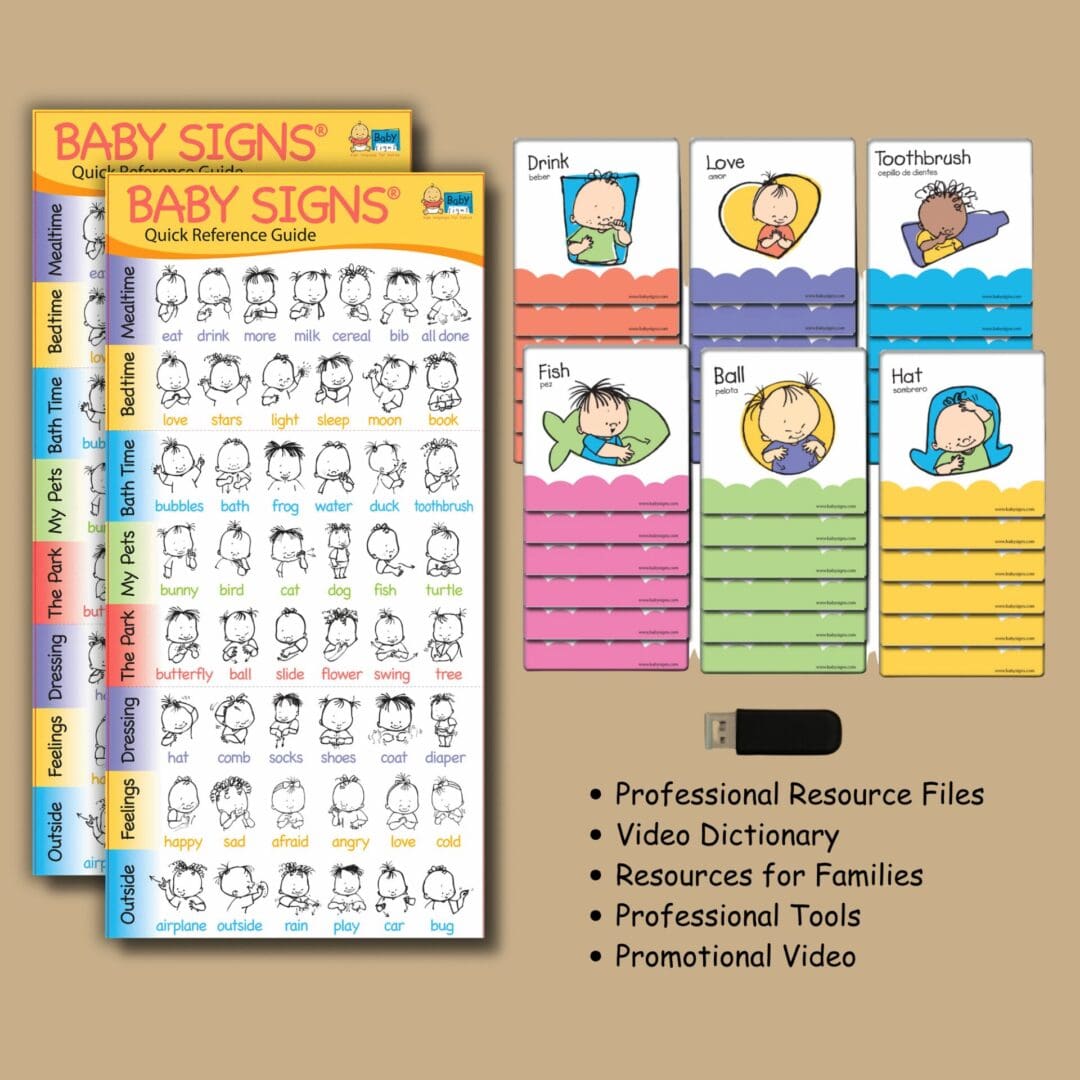
The Baby Signs® Program includes carefully designed materials that support consistent, family-centered implementation across early intervention, home visiting, and parent education settings.
Baby Signs® Professional Development Kit
The Professional Development Kit provides evidence-aligned instructional materials for professionals, including guidance for coaching parents, modeling signs during sessions, and supporting early communication across routines. Materials are designed for use in both in-person and virtual service delivery.
Take-Home Materials for Families
To support carryover between sessions, families may use optional take-home resources such as flashcards, board books, and posters. These materials help reinforce early communication strategies in everyday routines, supporting consistency between professional guidance and home practice.
Together, these tools help ensure that early communication strategies are implemented clearly, ethically, and consistently—benefiting both professionals and the families they serve.
Program Options and Resources for EI Providers

Professional Workshops for EI Teams
We offer professional learning designed specifically for providers using Baby Signs® in one-on-one and family-coaching settings. Sessions focus on implementation, caregiver coaching, ethical messaging, and practical integration into routines.
Parent Workshops
Parent workshops support caregiver understanding and consistency—helping families build confidence and follow-through between EI visits.
Professional Development Tools
The Baby Signs® Professional Development resources include practical materials you can use during sessions and share with families to support carryover.
Measurable Outcomes EI Teams Commonly Notice
EI providers who integrate the Baby Signs® Program into routine-based services commonly report:
-
Reduced frustration and fewer communication-based tantrums
-
More intentional communication and initiation
-
Stronger caregiver confidence and engagement
-
Richer language input during routines
-
Improved consistency between sessions
(As always, outcomes vary by child and family—Baby Signs® is a supportive communication strategy that complements EI services.)
Ready to Strengthen Early Communication in Your EI Program?
If you’re an Early Intervention agency, home visiting program, or therapy practice looking for a practical, research-based approach your team can implement quickly, here are three easy next steps:
 Option 1: Bring a Baby Signs® Professional Workshop to Your Team
Ideal for EI agencies, regional centers, home visiting teams, therapy clinics, and early childhood programs that want consistent implementation across staff.
Learn more about professional training options:
https://babysigns.com/early-childhood-educator-training/
Option 2: Add Parent Workshops to Improve Carryover
Pairing staff training with caregiver learning strengthens consistency across settings and supports family engagement.
Explore Baby Signs® workshops and classes:
https://babysigns.com/find-a-class/
Option 3: Equip Families with Easy Take-Home Visuals
We can recommend practical “starter sets” for families that align with EI goals and routines.
Contact us for recommendations for your program:
training@babysigns.com
Have Questions? Let’s Talk About Fit for Your EI Setting
If you’d like help selecting the best training format or materials for your EI program, we’re happy to help.
Website: https://babysigns.com
Email: training@babysigns.com
Schedule a call: https://calendly.com/babysigns
Procurement & Contracting Information
For Early Intervention Agencies & Public Programs
Baby Signs® professional training and materials are available for agencies, counties, and publicly funded programs serving infants, toddlers, and families.
Baby Signs Too, LLC is experienced in working with government and publicly funded agencies and can support professional development, parent education, and program-wide implementation.
Baby Signs Too, LLC
Government Contracting – Training, Services, and Products
• EDWOSB – Women-Owned Minority Small Business
• Unique Entity ID (UEI): QNE7PBBLY849
• CAGE/NCAGE: 9BFG9
• California Cal eProcure Cert ID: 2036449
 View our Capability Statement
