“Signs” of the Holidays!
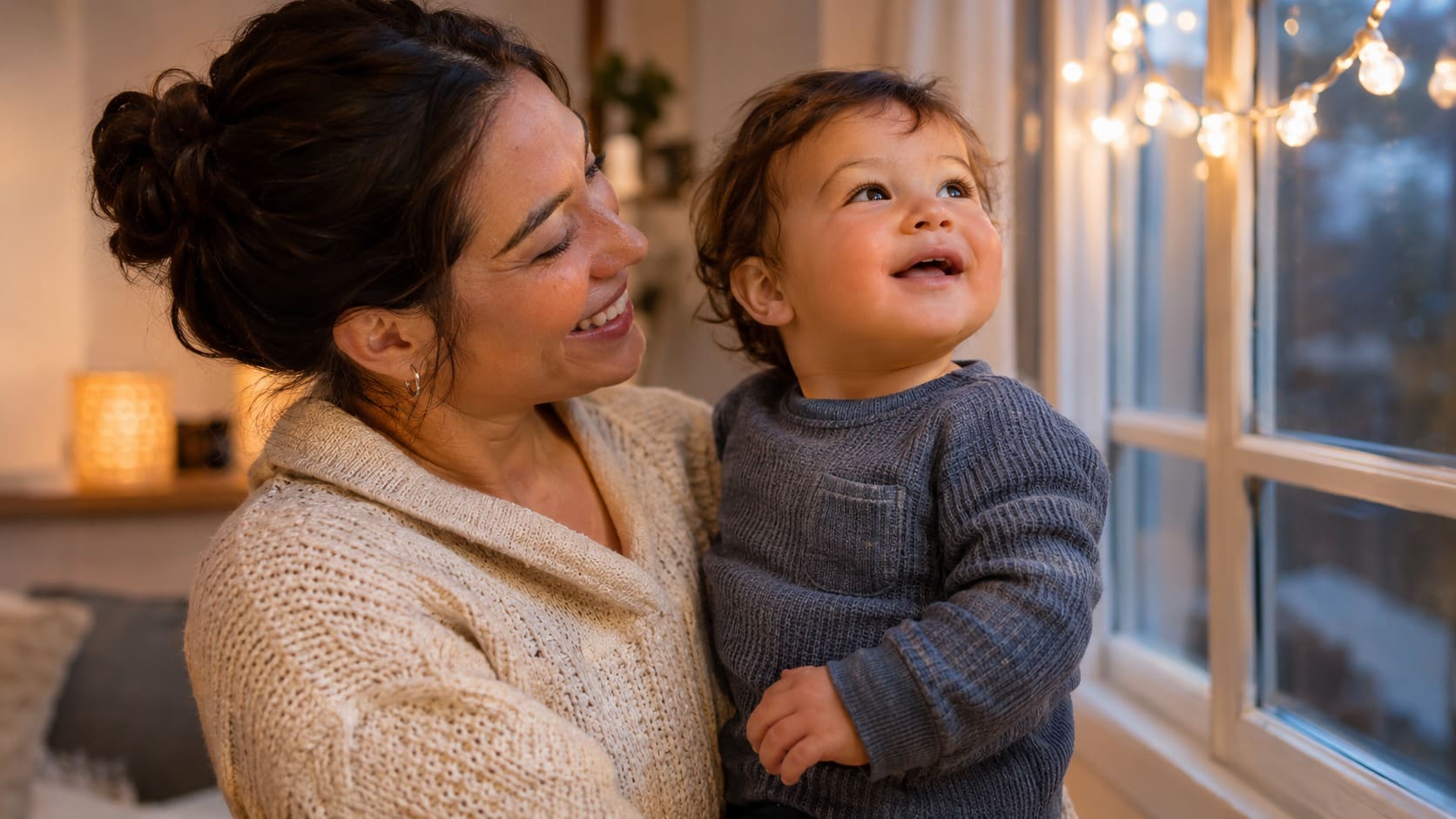
A string of lights. A familiar song. A candle glowing across the room. December gives babies and toddlers plenty to notice, and holiday baby signs can help them share what has caught their attention.
Whether your family celebrates Hanukkah, Christmas, Kwanzaa, New Year’s, or enjoys seasonal traditions of its own, the Baby Signs® Program offers a simple way to bring your little one into the conversation. By pairing signs with spoken words, you can give your baby another way to express an interest, ask for something, or share a feeling before they have all the words they need.
Start with the moments your child already finds interesting. A sign for LIGHT may be especially meaningful to a baby who stops to look at every glowing window. Another child might be more interested in MUSIC, a favorite BOOK, or a TREE outside.
Holiday Memories Shared Through Signs
Before babies can explain an entire experience in words, signs can help them begin the conversation. The following real stories were shared with the Baby Signs® Program.
An Ornament with a Story
After visiting Grandma in Virginia, 19-month-old Julia took Dad’s hand, led him to the Christmas tree, and pointed to a new ornament. Asked where it came from, she signed GRANDMA + TREE + ONE + HOME.
“Grandma let you pick one from her tree to bring home?” Dad asked.
“Yup!” Julia replied.
Children can use signs alongside the words they already know. When a parent responds by putting an idea into words, there is room for the child to confirm, add something, or continue the exchange.
Remembering the Lights
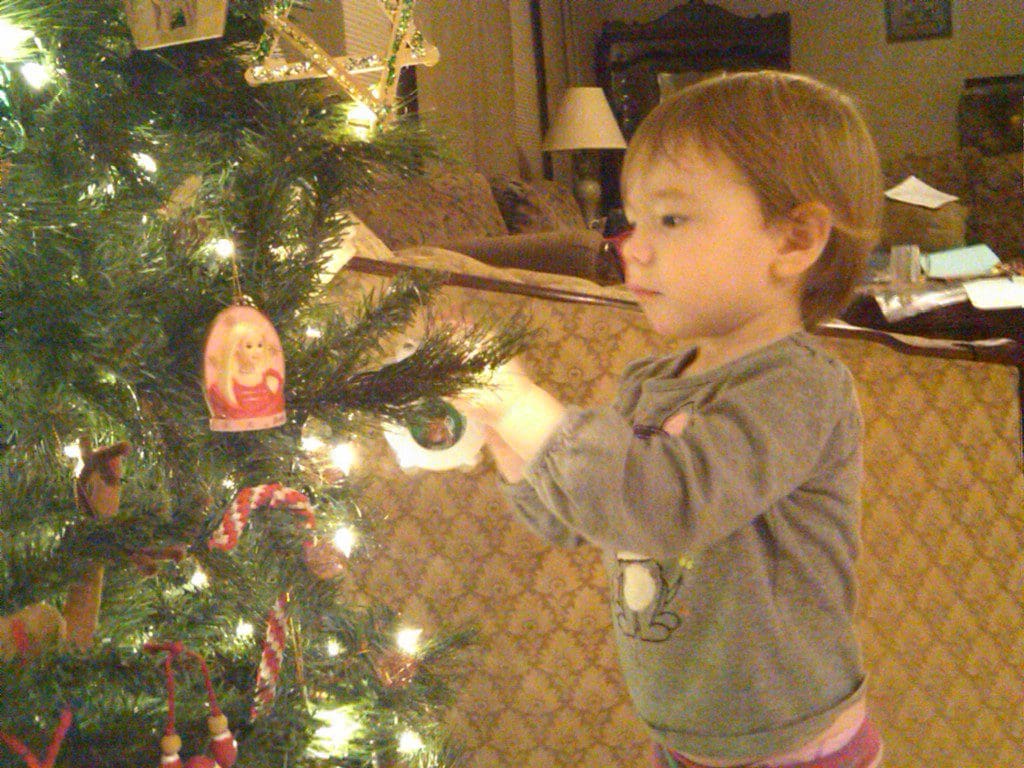
When Dad first switched on the Christmas tree lights, 13-month-old Jared beamed and repeatedly made his sign for LIGHT, opening and closing his fist.
His excitement continued: for the next three weeks, he eagerly signed LIGHT on waking each morning.
A familiar sign can become an invitation to share attention. When your baby signs about something they enjoy, responding with words and warmth helps keep that exchange going.
A Feeling About Santa
Fifteen-month-old Maddy cried during a department-store Santa visit until her mother sat with her.
Later, seeing Santa’s picture, she used her signs for AFRAID and CLOTHES. Her mother connected the two: she believed “clothes” was Maddy’s approximation of “Claus.”
There is room for every feeling in a conversation with a baby. A child who can express discomfort gives a caregiver an opportunity to acknowledge the feeling and offer comfort.
A Creative Way to Describe Candles
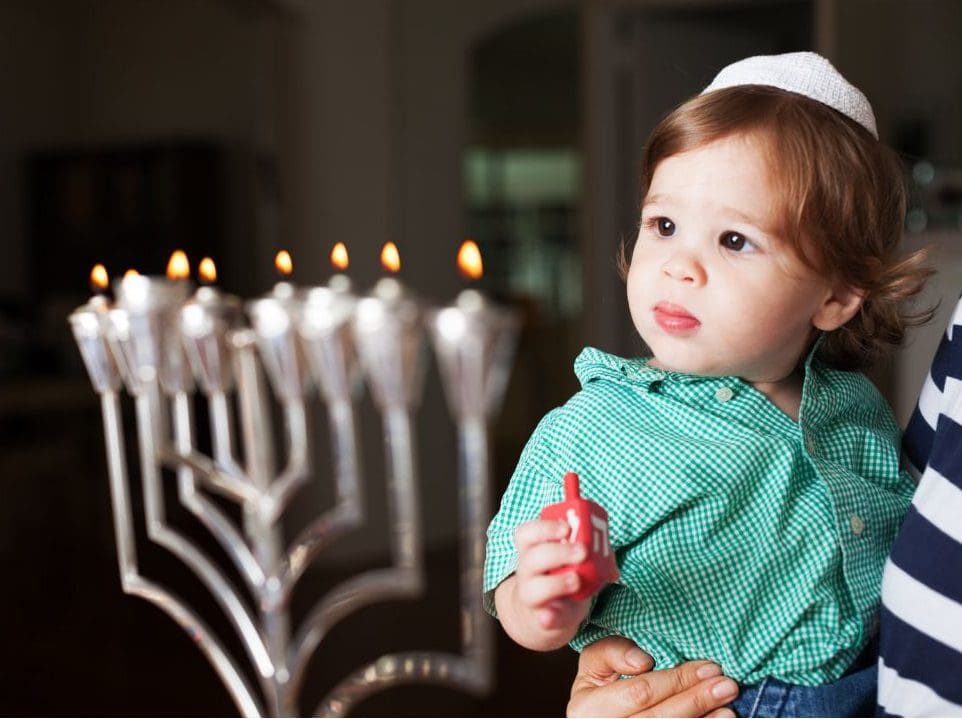
Jacob, 16 months, had loved candles since his first birthday. His parents expected him to notice a menorah, but his response surprised them.
He expanded his candle gesture: instead of blowing on one raised finger, he spread his fingers and blew on each.
A baby’s attempts may look different from an adult’s demonstrations. Look for meaning in the gesture, model the sign naturally, and keep enjoying the exchange.
When your baby makes a sign, take a moment to respond. Say the word, show your interest, and leave room for another turn. That small exchange can become part of the memories you make together.
Choose Holiday Baby Signs That Fit Your Family
Begin with a few signs you can use during experiences your child enjoys. Here are some possibilities:
- LIGHT: Notice a lamp, a neighborhood light display, or lights used in your family’s celebrations. Say “You see the light!” while showing the sign.
- CANDLE: Talk about candles in a menorah, a kinara, or another family tradition. Observe candlelight together from a safe distance, or use a battery-operated candle.
- GIFT: Model the sign while wrapping a present or showing your child something you are giving to someone.
- MUSIC: Use the sign before playing a familiar song. When it ends, pause and give your child a chance to respond. A child who knows MORE might ask to hear it again.
- TREE: Notice a tree outdoors, in a picture book, or decorated in your home.
- THANK YOU: Model the sign when someone helps, shares, or offers something. Let your child see how you use it naturally.
Choose the signs that match your child’s experiences. You can use the words your family speaks at home while modeling the signs.
Make Signing Part of the Moment
A few small changes can bring signing into activities you are already doing.
Follow your baby’s attention. If your child is watching the lights, talk about the lights. If they turn toward a song, make that your shared topic. Their interest gives you a place to begin.
Say the word as you sign. Keep talking naturally: “There’s the light,” “Let’s play music,” or “You found a tree.” Signs work alongside the words your baby hears.
Pause and respond. Leave room for your baby to look, point, smile, make a sound, or try a sign. Respond to the message they seem to be sharing. “You’re looking at the candle. I see it too!”
Return to familiar experiences. Read a favorite book again, sing the same song, or notice the same lamp each evening. These ordinary moments give you repeated opportunities to use a meaningful sign.
For more ideas about beginning and using signs in everyday routines, visit our Baby Signs® frequently asked questions.
Welcome Different Traditions in Child Care
In a child care setting, invite families to share a seasonal song, word, or tradition that matters to them. Some families may prefer activities without a holiday theme.
A shared book, music time, or a walk to notice lights can offer opportunities to use signs while respecting those preferences. Let families know which signs you are using so they can recognize them if their child uses one at home.
Bring Holiday Signs into Everyday Learning
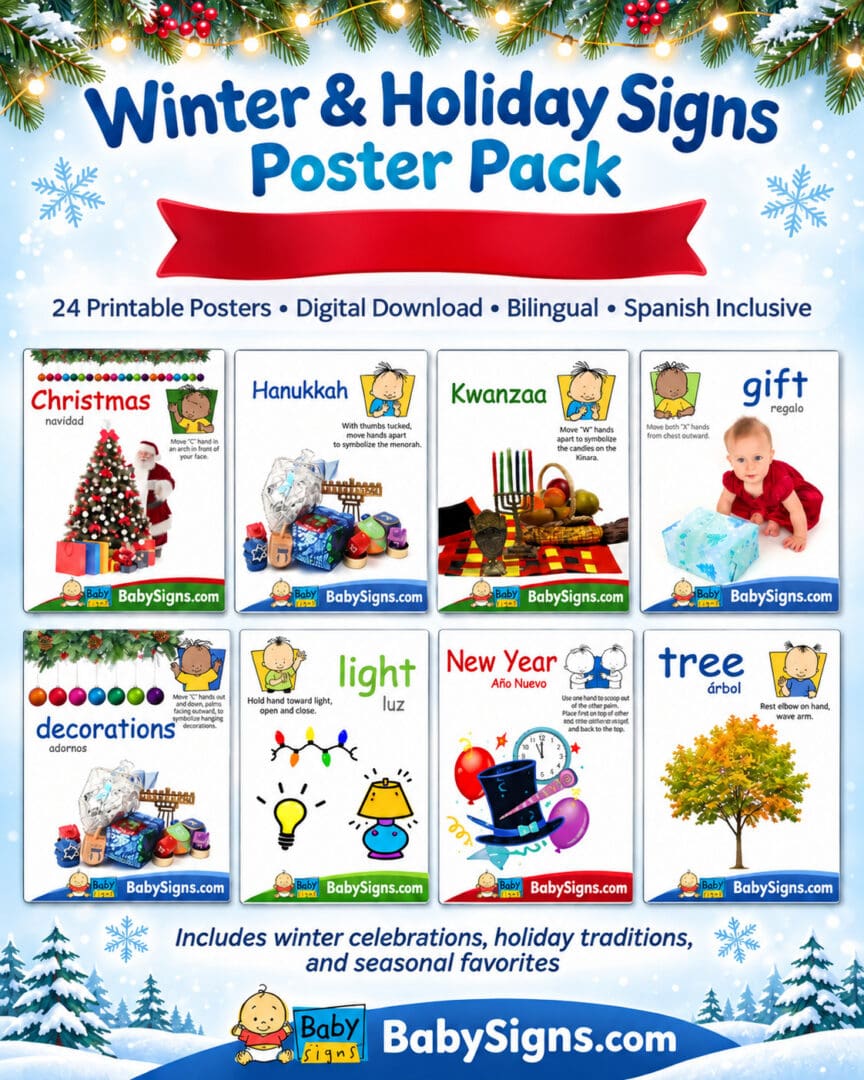
The December Holiday Signs Poster Pack includes 24 colorful, Spanish-inclusive posters featuring vocabulary for Christmas, Hanukkah, Kwanzaa, New Year’s, and the season.
The pack is available as a digital PDF download. Choose a few posters that fit your family’s activities or classroom plans and use them as reminders for the signs you want to model.
For more guidance, find a Baby Signs® class or instructor to help you get started.
As you enjoy the season together, notice the small things your baby wants to share. A light, a song, or a familiar decoration can give you a reason to pause, make a sign, and have a conversation.
