Why Babies Love Repetition (And How Baby Signs® Makes Learning Stick)
If you’ve ever felt like you’re repeating the same thing over and over with your baby—you’re doing it exactly right.
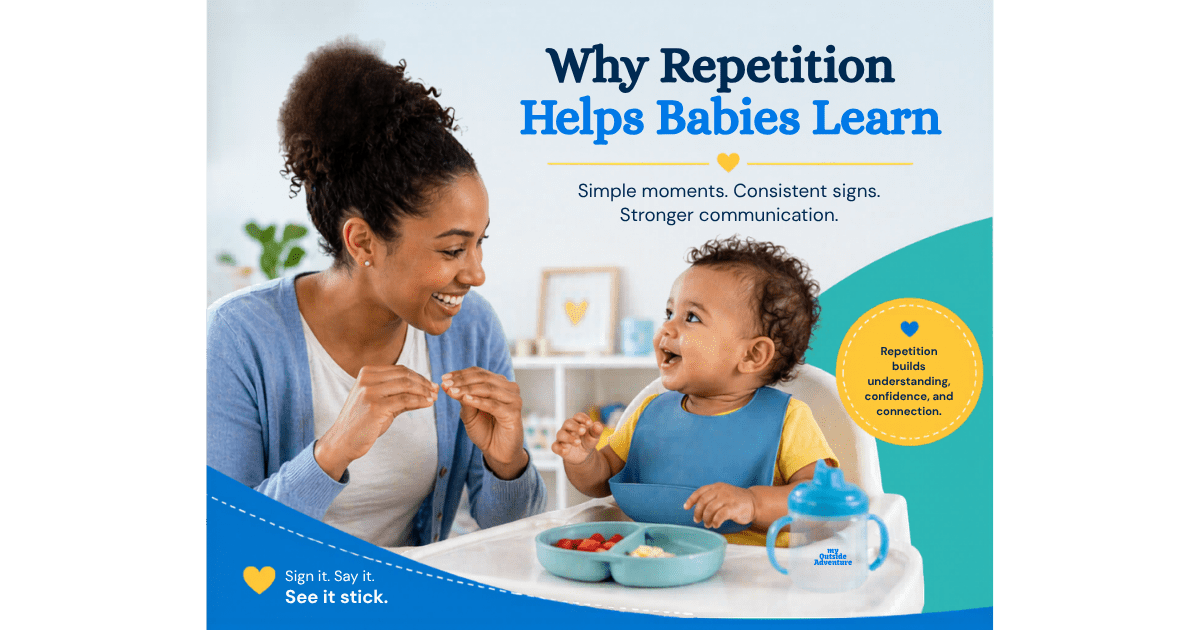
Repetition isn’t just helpful—it’s how babies learn best.
From hearing the same words to seeing the same gestures, babies learn through repeated experiences. These patterns help them make sense of the world, build memory, and develop communication skills.
And when repetition is paired with simple signs, learning becomes even more powerful.
🧠 Why Repetition Helps Babies Learn and Remember
During the first few years of life, a baby’s brain is rapidly forming connections. Repetition strengthens these connections, making it easier for babies to remember and understand what they see and hear.
When you repeat a word or a sign consistently, you’re helping your baby:
- Build memory and recognition
- Connect meaning to words and actions
- Feel more confident and secure
- Strengthen early communication skills
Repetition gives babies the time and consistency they need to learn at their own pace.
✋ How Baby Signs® Reinforces Learning
The Baby Signs® Program naturally supports repetition because signs are used during everyday routines.
Think about how often your baby:
- Eats
- Plays
- Needs help
- Finishes an activity
Each of these moments is an opportunity to repeat a sign in a meaningful way.
For example:
- Signing MORE during meals
- Signing ALL DONE at the end of playtime
- Signing MILK during feedings
These real-life moments help babies understand, remember, and respond.
You can explore more ways to use signs in everyday routines here:
https://babysigns.com/
🔁 Why Repetition + Real-Life Moments Work Best
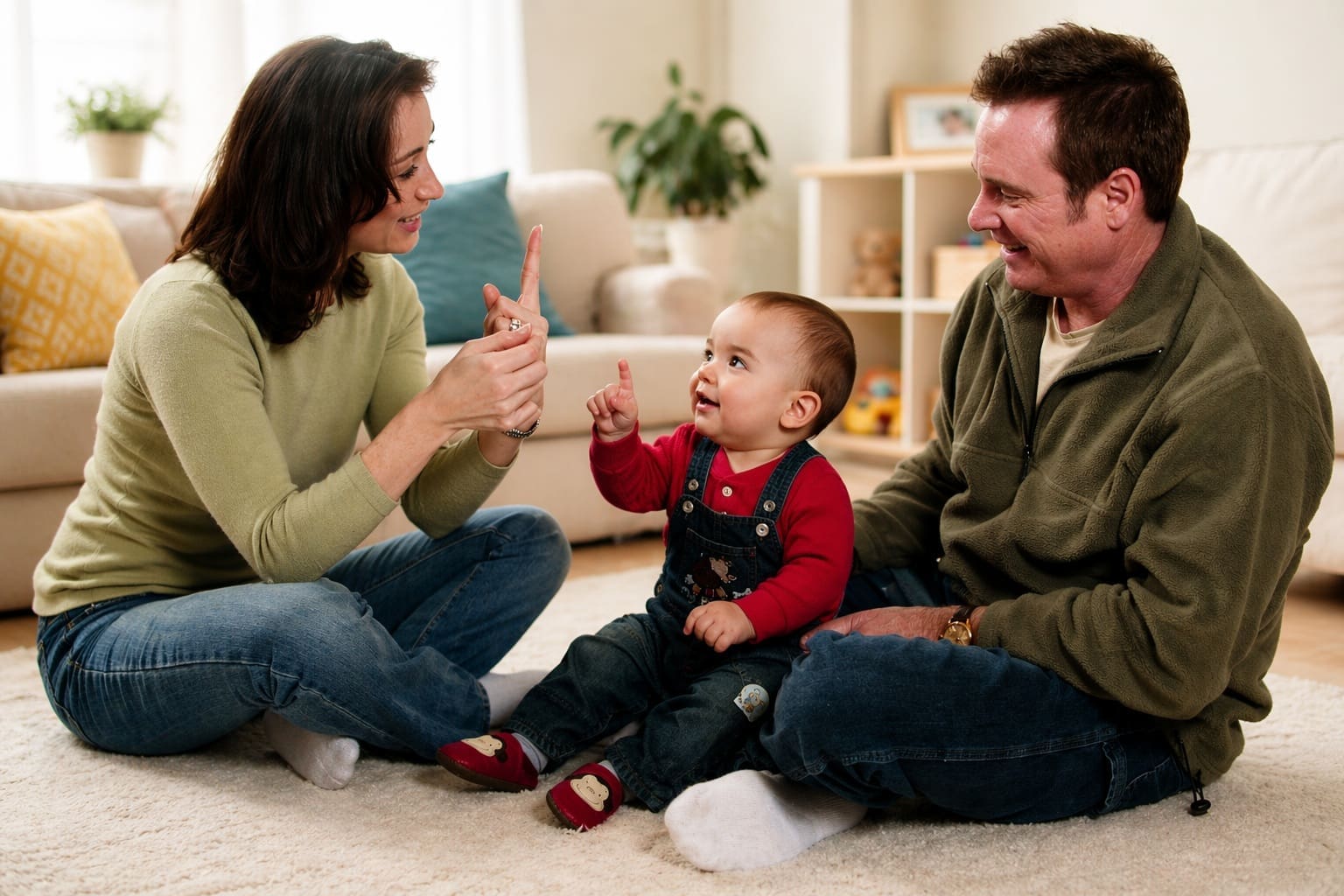
Repetition is most effective when it happens in context.
Babies don’t learn best from flashcards or drills—they learn from real experiences.
When a baby sees, hears, and experiences something at the same time, it creates a stronger connection in the brain.
For example:
- Seeing a cup, hearing “drink,” and watching the sign
- Feeling hungry, seeing milk, and learning the sign
This combination of repetition and real-life context is what makes learning stick.
And if you’re wondering when your baby will start signing back…
🧠 What to Expect (and What’s Normal)
One of the most common questions parents have is:
“Why isn’t my baby signing back yet?”
Even when babies aren’t signing, they are:
- Watching
- Processing
- Learning
Most babies begin signing between 10–14 months, though understanding starts much earlier.
If you start younger, it may take a little longer—but once your baby makes the connection, progress often happens quickly.
💡 Simple Ways to Use Repetition Every Day
You don’t need to change your routine—just build repetition into what you’re already doing.
Try this:
- Use the same sign during the same activity
- Repeat the word and sign together
- Follow your baby’s interest
- Keep it fun and natural
Consistency—not perfection—is what matters most.
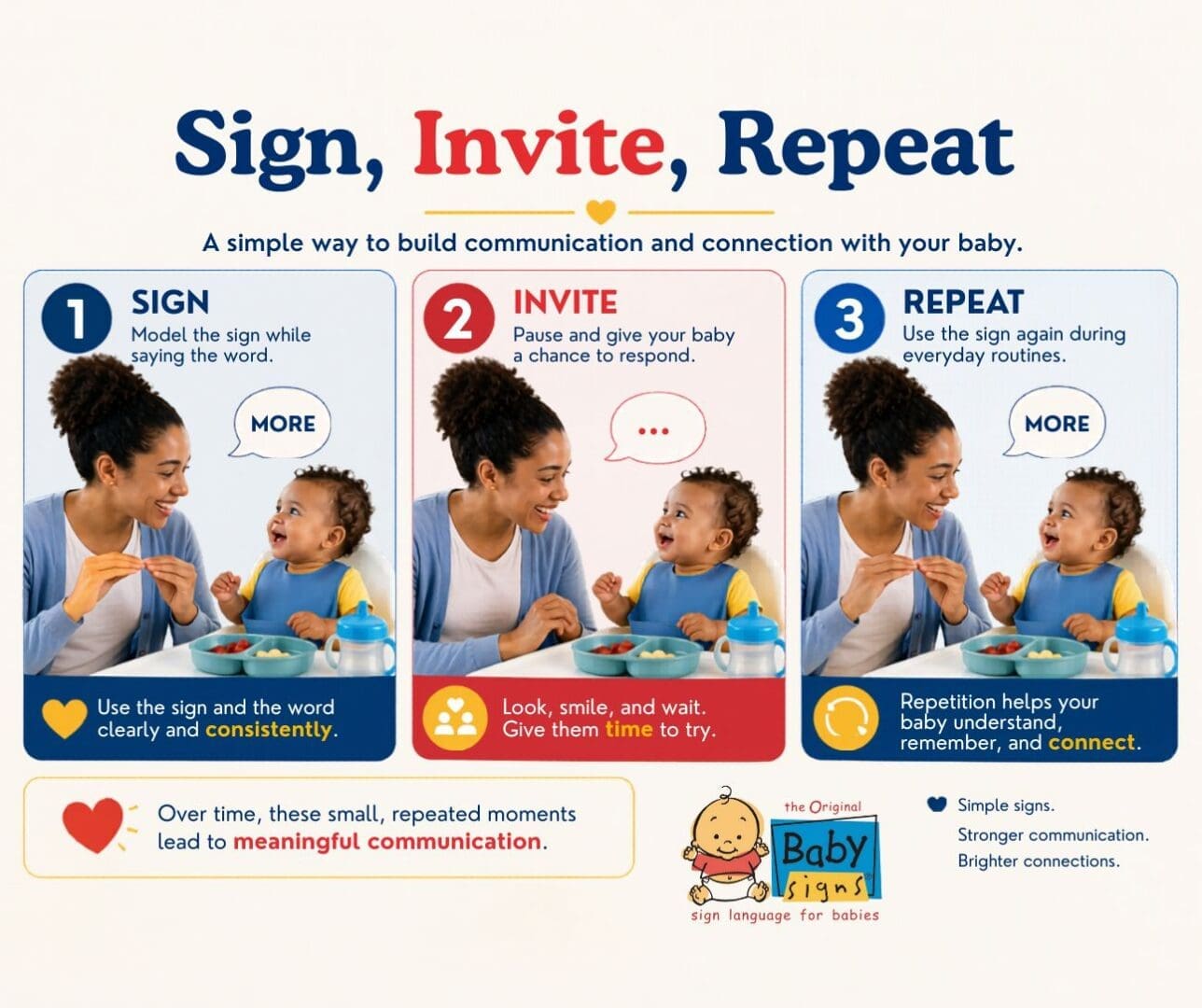
✋ A Simple Approach: Sign, Invite, Repeat
One of the easiest ways to build communication with your baby is to follow a simple pattern:
Sign – Model the sign while saying the word
Invite – Pause and give your baby a chance to respond
Repeat – Use the sign again during everyday routines
This gentle approach keeps learning natural and pressure-free—while giving your baby the repetition they need to understand and eventually respond.
Here’s a simple way to remember it:
🌱 Building Confidence Through Communication
When babies begin to recognize patterns and communicate successfully, it builds confidence.
They learn that:
- Their actions have meaning
- Their communication is understood
- They can interact with the world around them
These early experiences lay the foundation for future language, learning, and connection.
It starts with one simple moment—and one simple sign.
💛 Ready to Keep Going?
You don’t need to do more—you just need to keep going.
Repetition may feel simple, but it’s one of the most powerful ways to support your baby’s development.
👉 Start building communication today
Explore the Baby Signs® Quick Reference Guides:
https://babysigns.com/product/baby-signs-quick-reference-guides/
👉 Find a class near you
👉 Learn more about the Baby Signs® Program
Because every baby learns through connection, consistency, and repetition.
