My Baby Understands the Sign, So Why Aren’t They Signing Back Yet?
You’ve been signing MILK, MORE, ALL DONE, or another favorite sign with your baby for weeks. Then one day, something exciting happens: your baby clearly shows that they understand what the sign means.
But they still aren’t signing it back.
Should you be worried?
Usually, no. Understanding a sign and being ready to produce that sign are two different developmental steps. In fact, babies often understand much more than they can express, whether communication involves signs or spoken words.
So if your baby seems to understand your signs but isn’t using them yet, keep going. A lot of learning may already be happening.
Understanding Comes Before Expressing
Long before babies can say everything they understand, they begin connecting words, gestures, people, objects, and routines with meaning.
The same thing can happen with signs.
Your baby may see you sign MILK and become excited because they know what comes next. They may look toward the dog when you sign DOG or reach toward their cup when you sign DRINK.
Those responses matter.
They show that your baby is beginning to understand the connection between the sign and its meaning, even if they aren’t yet making the sign themselves.
The Baby Signs® research(opens in new tab) also distinguishes between receptive language, what babies understand, and expressive language, what they can communicate. In the long-term Baby Signs® study, children were assessed in both areas of language development.
Signing Takes More Than Understanding
To use a sign intentionally, your baby has to do several things at once.
They need to remember the sign, recognize when it applies, decide they want to communicate something, and coordinate their hands or body well enough to produce it.
That’s a lot!
This is also why a baby’s first signs may not look exactly like the signs an adult makes.
Your baby might use one hand instead of two. The movement may be smaller or less precise. A sign might even look slightly different from one day to the next.
What matters most at first is meaning and consistency, not perfect form.
If your baby repeatedly makes the same approximation in the same situation, pay attention. That may be your baby’s version of the sign.
Keep Modeling, Without Testing
Once parents realize their baby understands a sign, it can be tempting to start asking:
“Can you show me MORE?”
“Where’s the sign for MILK?”
“Show Mommy the sign!”
But signing works best when it remains part of natural communication rather than becoming a test.
Instead, continue to say the word and make the sign together during real situations.
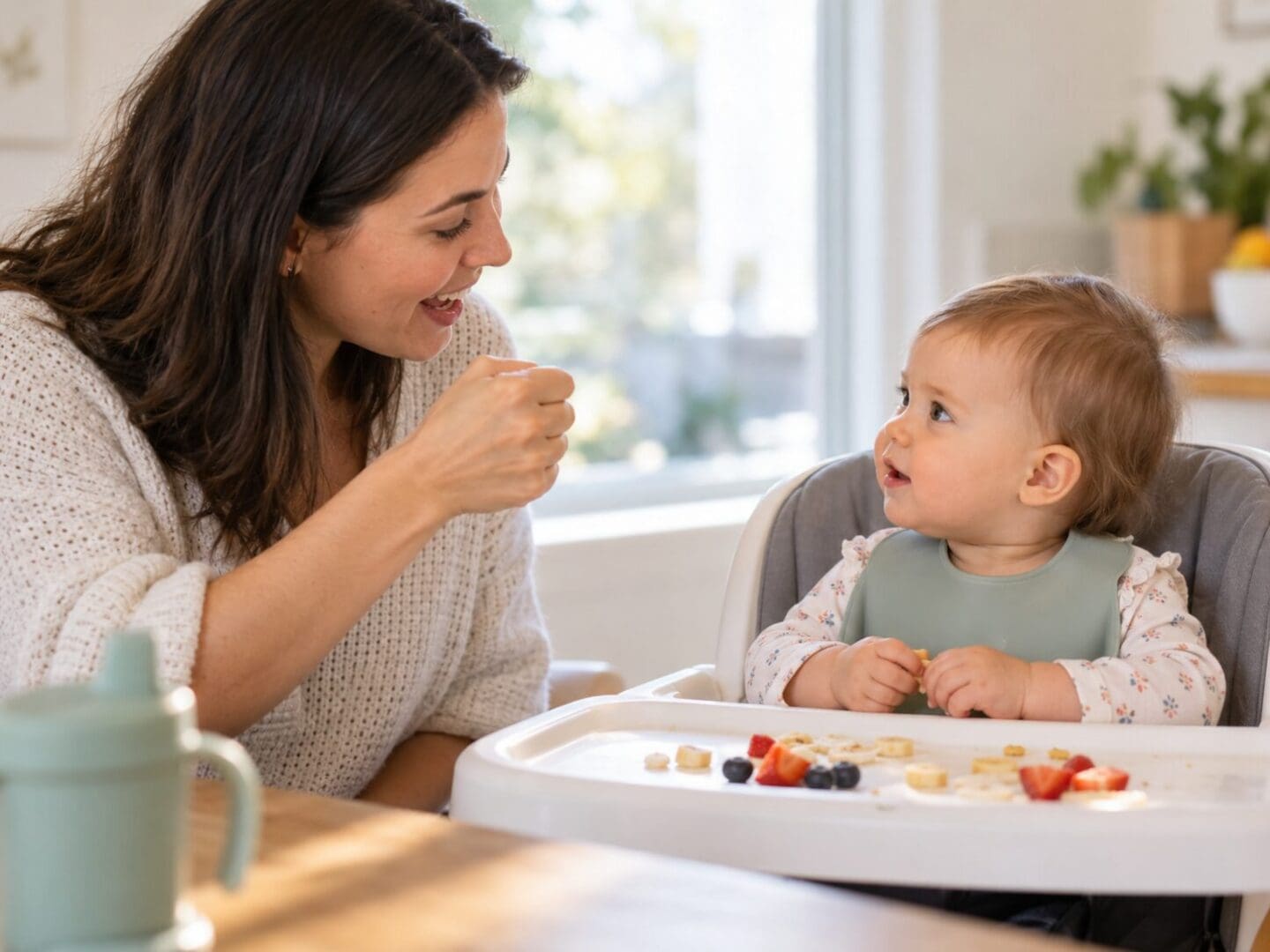
When you offer milk, say “MILK” and sign MILK.
When your baby finishes eating, say “ALL DONE?” while making the sign.
When your baby reaches for another piece of banana, model MORE as you say, “Do you want MORE?”
Your baby gets another meaningful example every time you do this.
And because the Baby Signs® Program pairs signs with spoken words, babies continue hearing language while also gaining another way to communicate before speech is fully developed.
Watch for the Little Signs of Progress
Your baby may be communicating more than you realize.
Before a clear first sign appears, you may notice your baby:
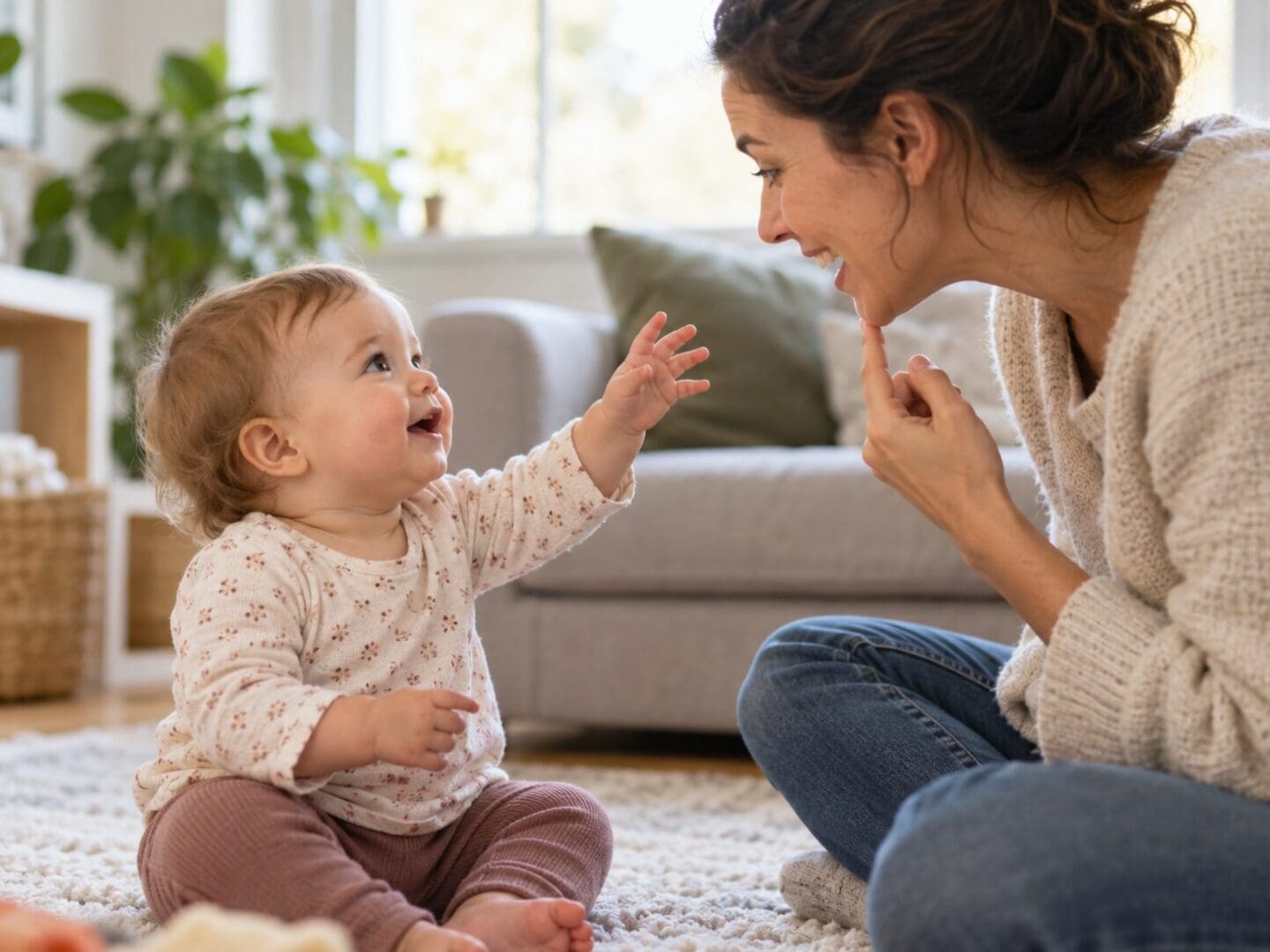
- looking at your hands when you sign
- smiling or becoming excited when they recognize a sign
- looking toward the object you’ve signed about
- reaching, pointing, or vocalizing in response
- trying part of the hand movement
- creating their own consistent approximation of a sign
These are all reasons to keep the interaction going.
Respond enthusiastically when you recognize what your baby is trying to tell you. Your response helps reinforce one of the most important lessons of all:
Communication works.
Remember: Your baby doesn’t need to make a perfect sign for it to be meaningful. Consistent approximations count as communication too.
Follow Your Baby’s Interests
If your baby isn’t signing back yet, resist the urge to introduce dozens of new signs.
Start with a few signs that are especially meaningful in your baby’s world.
A baby who loves the family dog may be highly motivated to use DOG. A baby who loves snacks may discover the power of MORE very quickly. Another baby might be fascinated by LIGHT, BOOK, BALL, or BATH.
The best first signs are often the ones connected to things your baby already notices, enjoys, or wants.
That’s why the Baby Signs® Program encourages families to make signing part of everyday life rather than treating it like a lesson.
Need ideas for signs that fit your baby’s everyday routines and interests? The Baby Signs® Quick Reference Guide(opens in new tab) includes 67 illustrated signs and practical tips to help you get started.
Every Baby Has Their Own Timeline
There isn’t one exact age when every baby should begin signing.
Parents can begin modeling signs before their baby is physically ready to use them. Many babies begin signing during the later part of the first year, but development varies from child to child.
Instead of comparing your baby with another child, look for progress in your own baby’s communication.
Are they understanding more?
Are they responding to signs?
Are they trying new gestures or sounds?
Are they finding new ways to get your attention and share what they want?
Those are important developments, too.
Keep Signing, Talking, and Connecting
If your baby understands your signs but isn’t signing back yet, you don’t need to turn signing into extra work.
Keep using a few meaningful signs during the routines you already share. Say the spoken word as you sign. Notice your baby’s attempts to communicate and respond to them.
You may discover that your baby has been learning all along.
And when that first recognizable sign finally appears, you’ll know all those little everyday interactions helped make it possible.
Want to learn more about what your baby may already understand? Read What Does Your Baby Know Before They Can Talk?(opens in new tab)
Ready to Keep Signing?
Whether you’re just getting started or waiting for those first signs to appear, Baby Signs® has resources to help you make signing a natural part of everyday life.
