Fall Routines Made Easier with the Baby Signs® Program
Fall brings so many changes for babies and toddlers.
The weather gets cooler. Days begin to feel shorter. Families spend more time getting dressed in layers, heading outside, visiting pumpkin patches or apple orchards, and settling into new seasonal routines.
For little ones who understand much more than they can say, all of those changes can sometimes feel confusing.
The Baby Signs® Program(opens in new tab) can help make everyday fall routines more predictable by giving babies simple ways to understand what is happening and communicate what they need.
Getting Dressed for Cooler Weather
One of the most noticeable changes in fall is getting ready to go outside.
Instead of simply grabbing a coat, hat, or shoes, turn dressing into a communication opportunity.
Useful signs might include:
COAT • HAT • SHOES • SOCKS • OUTSIDE • COLD
As you help your baby get dressed, say the word and show the sign:
“Let’s put on your COAT.”
“Your SHOES go on next.”
“It’s COLD outside today.”
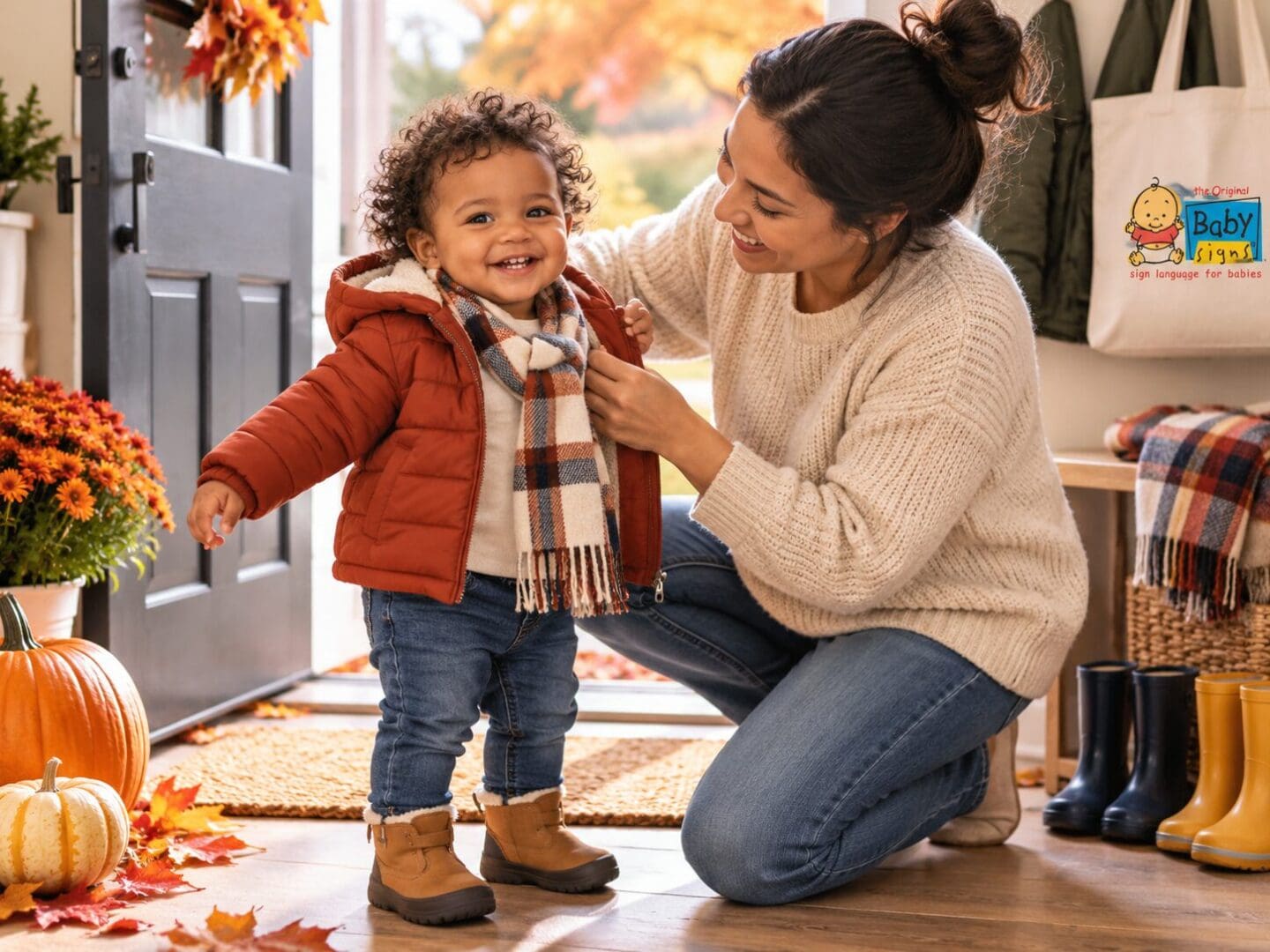
Repeated routines help babies connect the spoken word, the sign, and the experience.
And as babies begin using signs themselves, they may be able to tell you what they need before you have to guess.
Making Transitions More Predictable
Fall can bring changes in schedules too.
Older siblings may be back in school. Child care routines may shift. Outdoor play may end earlier. Families may spend more time indoors as the weather changes.
Transitions are often easier when babies know what is coming next.
Signs such as:
WAIT • ALL DONE • OUTSIDE • EAT • SLEEP • BATH
can help give babies visual clues about what is happening.
For example:
“We’re ALL DONE playing outside.”
“We need to WAIT while we put on our shoes.”
“It’s almost time to EAT.”
Simple signs can make routines feel less abrupt and give babies another way to participate in the transition.
Fall Foods Create Easy Signing Opportunities
Seasonal foods provide lots of natural reasons to sign.
Apples, pumpkin, warm cereal, soups, and family meals can all become opportunities for communication.
Useful signs include:
EAT • MORE • DRINK • APPLE • CEREAL • ALL DONE
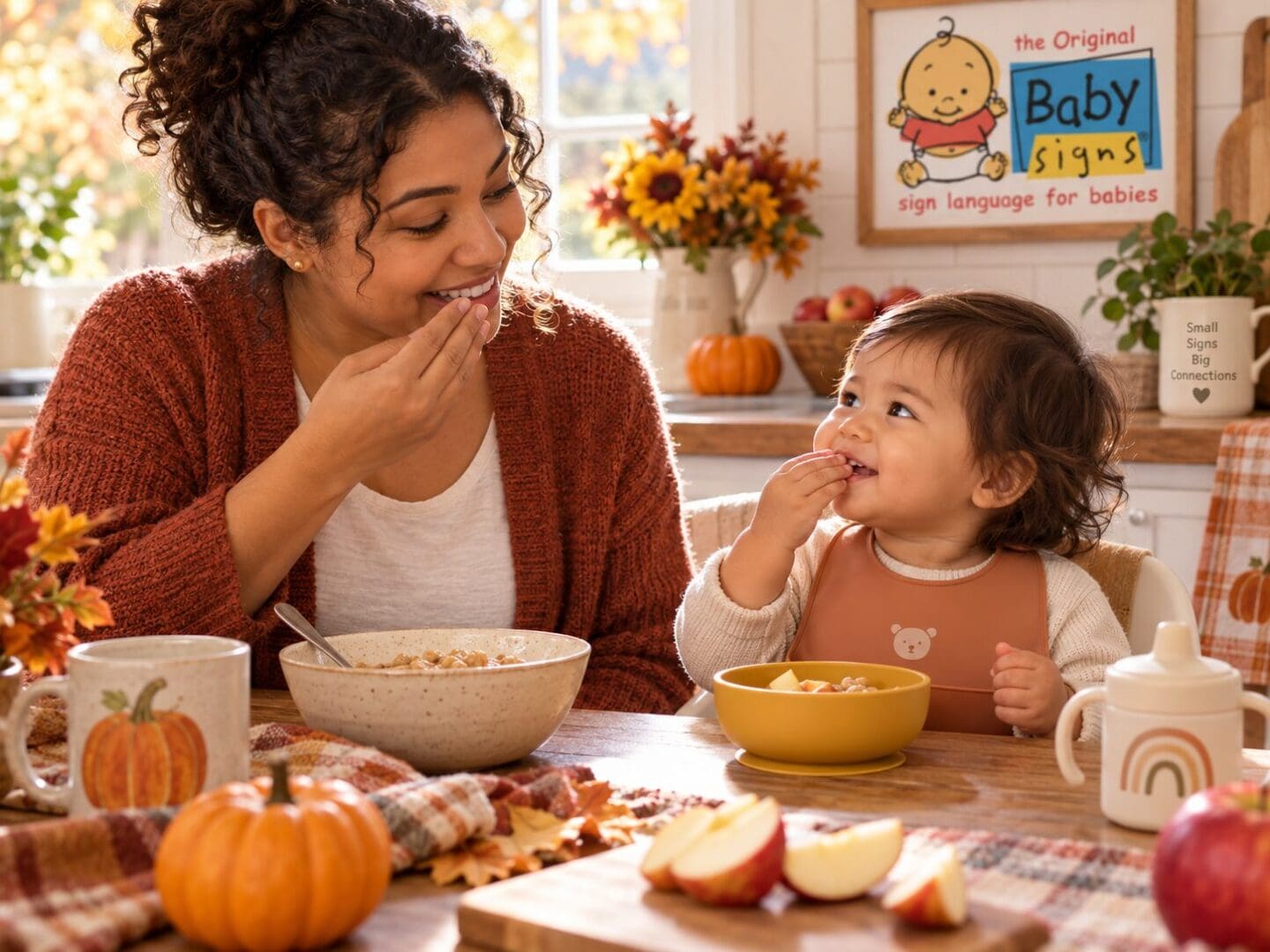
Mealtimes are especially helpful for signing because they happen every day and babies are highly motivated to communicate about food.
A toddler who can sign MORE or ALL DONE has a much clearer way to participate in the meal than relying only on reaching, pushing food away, or becoming frustrated.
Take Signing Outdoors
Fall is full of things for babies to notice.
Colorful leaves.
Birds.
Rain.
Trees moving in the wind.
Pumpkins.
Dogs on walks.
A trip outside does not have to become a “lesson.” Simply follow your baby’s attention.
If your baby notices a bird, sign and say BIRD.
If they point to a tree, sign TREE.
If rain begins to fall, use RAIN.
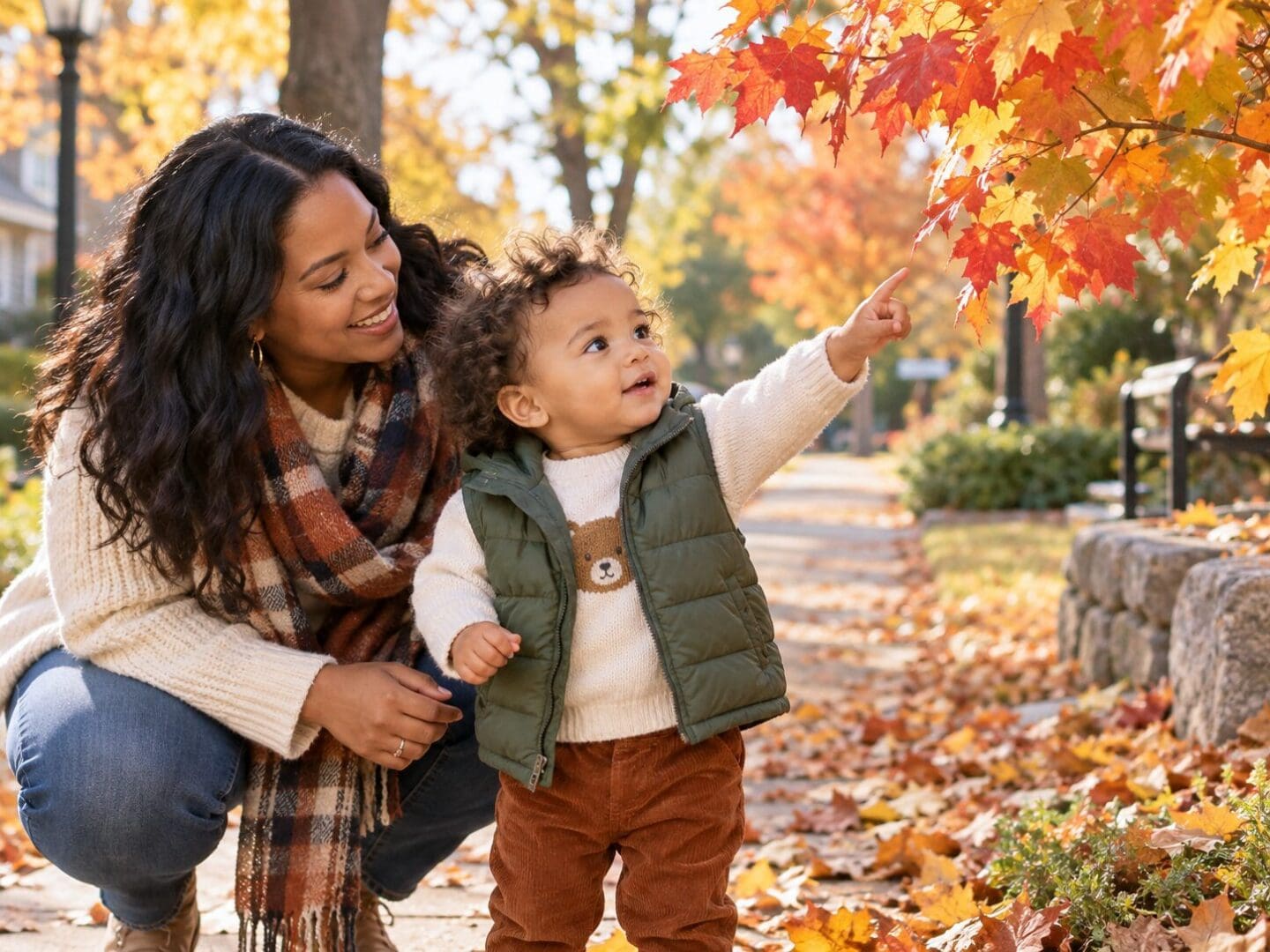
The goal is not to teach every seasonal word at once. It is to give babies ways to communicate about the things that genuinely interest them.
For more seasonal vocabulary, families can also explore our fall nature signs(opens in new tab) and discover easy ways to bring signing into walks, pumpkin patches, and outdoor adventures.
Storytime Can Support Seasonal Routines Too
Fall is a wonderful time to settle in with books.
Stories about apples, pumpkins, leaves, animals, weather, and family routines can help babies connect what they see in books with what they experience in real life.
Before reading, sign BOOK.
As familiar pictures appear, pause and use signs your baby already knows.
Let your baby point, sign, and choose what to talk about.
That turns storytime into a shared conversation rather than simply reading words on a page.
Help Babies Communicate During Fall Outings
Pumpkin patches, apple orchards, festivals, and family gatherings can be exciting, but they can also be overwhelming for young children.
A few familiar signs can be especially helpful when routines change.
Consider signs such as:
HELP • HURT • DRINK • EAT • MORE • ALL DONE • MOMMY • DADDY
A toddler who can sign ALL DONE at a busy event or ask for HELP has another way to communicate before frustration builds.
Signs can also give babies another way to communicate important needs and concerns(opens in new tab) when routines change.
And familiar signs can provide a little consistency even when the environment is new.
Follow Your Baby’s Lead
Some of the best fall communication moments may be the ones you never planned.
Your baby may become fascinated by a leaf on the sidewalk.
A toddler may spot a pumpkin across the room.
A bird may suddenly land outside the window.
When babies show us what has captured their attention, we have an opportunity to pause and join them.
Talk about it.
Use the sign if you know it.
Let your baby decide where the conversation goes.
One of the most meaningful parts of signing is learning to let your baby pick the topic.(opens in new tab)
These small interactions help babies experience something very important:
What I notice matters. What I have to say matters.
Simple Signs for a Season of Change
Fall is full of new sights, sounds, routines, and experiences.
Baby Signs® can help families make those changes easier by giving babies simple ways to understand what is happening and communicate along the way.
You do not need dozens of signs.
Start with the routines your family already has.
Use a few signs consistently.
Follow your baby’s interests.
And let the season give you plenty to talk about.
Simple signs. Powerful communication.
Looking for More Fall Signs?
Explore our fall Baby Signs® resources for seasonal signs you can use during walks, storytime, meals, and family outings.
