Little Hands, Big Connections: Bringing Baby Signs® Into Early Childhood Programs
Every day, early childhood educators help babies and toddlers explore, learn, and communicate.
From morning arrivals and mealtimes to playtime and transitions, these everyday experiences provide countless opportunities for connection.
But what happens when a baby knows what they want and doesn't yet have the words to express it?
The Baby Signs® Program gives babies and toddlers another way to communicate before they can talk.
By incorporating simple signs into daily routines, early childhood programs can help children express their needs, strengthen relationships, and create a more consistent approach to communication across classrooms and families.
Here's how to get started.
1. Make Baby Signs® Part of Everyday Routines
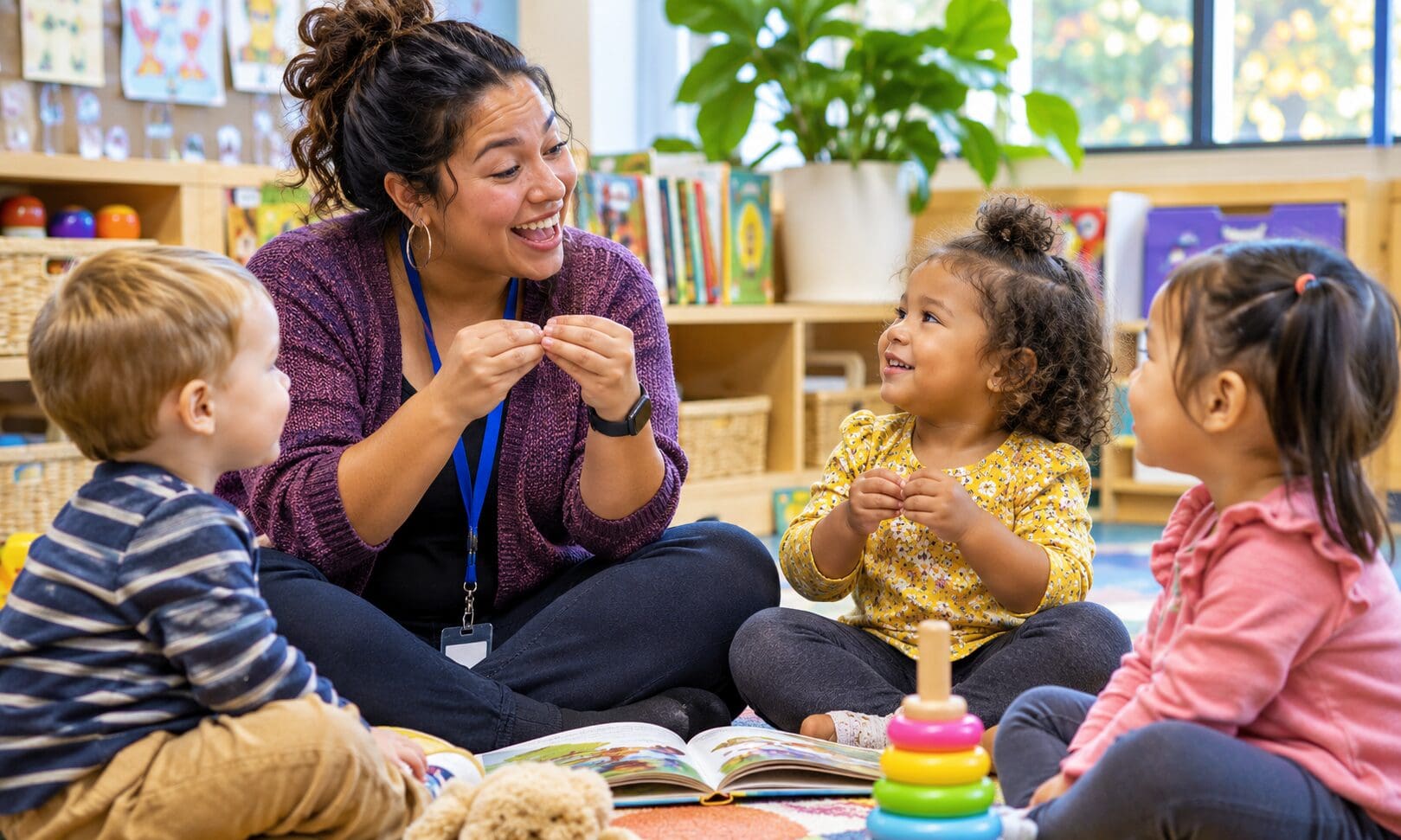
One of the greatest advantages of using the Baby Signs® Program in early childhood programs is how naturally signs fit into activities that already happen throughout the day.
There's no need to add lengthy lessons or change established routines.
Educators can simply pair familiar signs with spoken words during everyday interactions.
For example:
- Mealtimes: Use EAT, MORE, MILK, DRINK, and ALL DONE.
- Playtime: Introduce HELP, PLAY, BALL, and BOOK.
- Diaper changes: Model DIAPER, WASH, and ALL DONE.
- Storytime and circle time: Incorporate signs into familiar songs, stories, and activities.
- Transitions: Use signs such as SLEEP, SHOES, and OUTSIDE to help children anticipate what's coming next.
Even babies who aren't signing independently yet can begin making connections between spoken words, gestures, and everyday experiences.
Baby Signs® Tip: Start with five or six signs that are useful throughout the day. Add new signs as children and staff become comfortable.
2. Create Consistency Across Staff and Classrooms
Imagine a toddler signing HELP to one teacher, but another teacher doesn't recognize the sign.
That child's message might be missed.
When educators understand and use familiar signs consistently, children have more opportunities to communicate with different caregivers.
Programs can encourage consistency by:
- Introducing a shared list of frequently used signs.
- Displaying Quick Reference Guides and signing posters in classrooms.
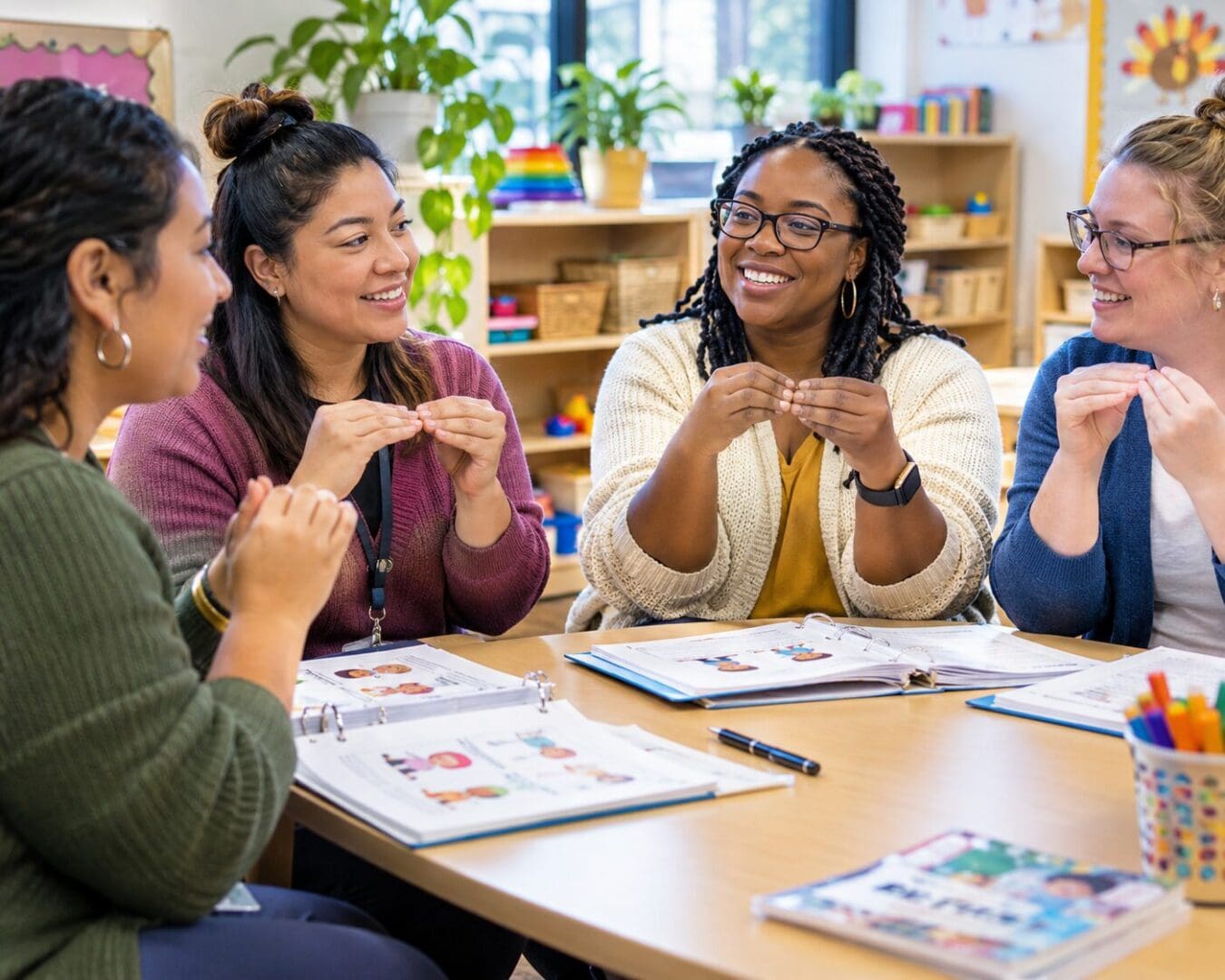
- Practicing a few signs during staff meetings.
- Including signing resources in new employee orientation.
- Encouraging staff to recognize children's signing attempts, even when their handshapes aren't perfect.
The goal isn't perfect signing. It's helping children feel understood.

3. Strengthen Connections Between Home and Child Care
Communication doesn't stop when children leave the classroom!
When families and educators use familiar signs, babies and toddlers have additional opportunities to communicate across different environments.
Early childhood programs can encourage family participation by sharing a Sign of the Week, sending home simple signing resources, or introducing signs during parent meetings and family activities.
For example, a child might see the sign for MORE while hearing "more" at child care and "más" at home.
Signs can be paired with words in different spoken languages, making them useful for multilingual families.
Baby Signs® Tip: Encourage families to practice signs during routines they already enjoy, such as mealtimes, bath time, and reading together.
4. Bring the Baby Signs® Program Into Different Early Childhood Settings
The Baby Signs® Program can be incorporated into a variety of programs serving babies, toddlers, and families.
Child Care Centers and Family Child Care Homes
Educators can introduce signs during meals, diaper changes, playtime, and daily transitions.
Early Head Start and Head Start Programs
Staff can use signs during everyday interactions while sharing communication strategies with parents and caregivers.
Home Visiting Programs
Home visitors can demonstrate simple signs during family routines, helping parents introduce signing naturally at home.
Family Resource Centers and Parent Support Programs
Professionals can introduce families to the benefits of early communication through parent education, demonstrations, and signing resources.
Whatever the setting, the goal remains the same: helping young children communicate and connect with the important adults in their lives.
5. Bring Baby Signs® Training to Your Organization
For early childhood programs interested in a consistent, program-wide approach, professional training can help staff build confidence and learn practical signing strategies.
The Baby Signs® Early Childhood Educator Training and Center Certification Program offers approximately three hours of training focused on incorporating signs into everyday classroom routines, activities, and interactions.
Organizations can choose from:
- Instructor-Led Training: A Baby Signs® Independent Certified Instructor guides staff through the training.
- Center Certification: A director, administrator, or designated staff member facilitates the three-hour, video-based training using the Baby Signs® Center Certification Program materials.
Programs can also explore the optional Baby Signs® Classroom Kit, which provides resources such as Quick Reference Guides, Concept Cards, Circle Time Books, signing posters, and music.

Explore Early Childhood Educator Training and Center Certification
Organizations interested in preparing staff to teach Baby Signs® classes and workshops can explore the separate Independent Certified Instructor Program.
Little Hands, Big Connections
Every baby has something to communicate.
Sometimes it's a request for MORE. Sometimes it's a sign for HELP. And sometimes it's an excited gesture, a smile, or a shared moment of discovery.
When educators recognize and respond to these messages, they're doing more than teaching signs.
They're helping children discover the power of being understood.
And when educators, families, and organizations work together, those small moments can lead to meaningful connections.
Ready to Bring Baby Signs® to Your Program?
Discover how Baby Signs® training and certification can support your early childhood program.
Have questions about training for your team or multiple locations?
Simple signs. Powerful communication.
