A Window into the Infant Mind
By Linda Acredolo, Ph.D. and Co-founder of the Baby Signs® Program.
Much to my delight, the good news about baby sign language has spread far and wide—especially in contrast to how few people knew anything about it when Dr. Susan Goodwyn and I published our first research article about babies and signing in 1985.
I do find, however, that many parents and child care providers still focus almost exclusively on the mealtimes signs—like EAT, DRINK, MILK, MORE, ALL DONE. What a shame! Yes, babies want and need to communicate these things, but many of them are even more interested in communicating about the exciting things they see in the world around them.
Here’s a true story from our book, Baby Signs, that illustrates my point:
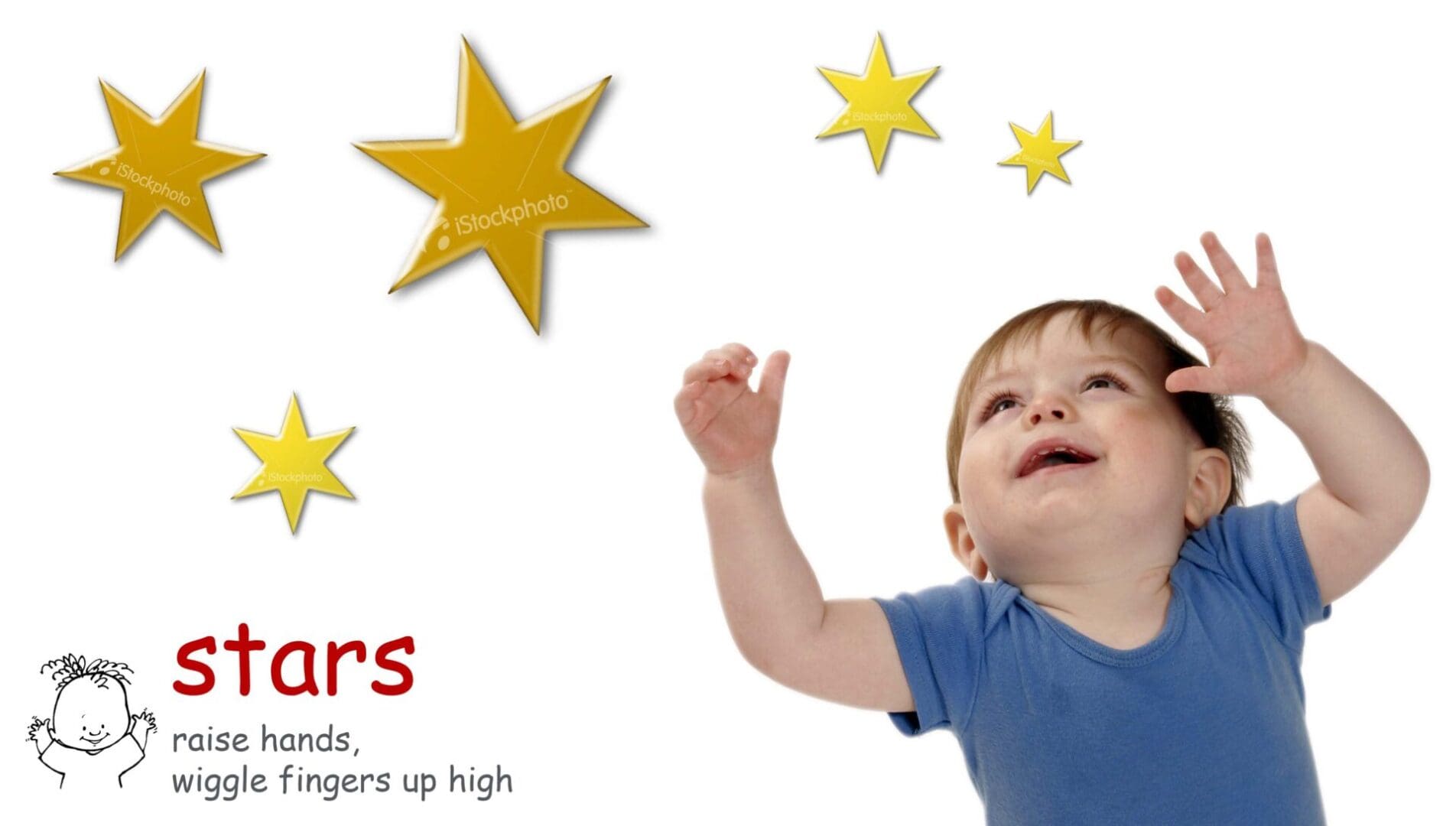
Abby, 14 months old, was visiting her aunt. When bedtime rolled around, her dad tucked her into bed in her cousin’s room. Just after he switched off the light and closed the door, he heard Abby calling “Dada!” in an excited voice. Switching the light back on and peeking in, he saw Abby wiggling her fingers in the air—her sign for “stars.” He looked around in vain for any stars and simply settled her down again. But then, as he switched off the light and took one last peek into the room, he realized what Abby had seen. The ceiling was covered with fluorescent stars! Invisible with the lights on, the stars appeared as if by magic as soon as they were off. “You’re right! There are stars!” said her dad as he lifted her up to touch them. What a shame if Dad had missed the chance to share his daughter's excitement.
Related: Learn more about why it’s so valuable to let babies pick the topic when communicating with signs.
Babies want to tell those they love that they see things that amaze them—like Abby’s stars. They want to request to read a book, to blow bubbles, or to swing on a swing. Providing babies with signs for these things, as we do in the Baby Signs® Program, gives them a chance to share their worlds with adults—and gives adults an amazing window into the infant mind.
Happy Signing!
Linda Acredolo, Ph.D.
Co-Founder, the Baby Signs® Program and Professor Emeritus, UC Davis
Want to try the sign for STARS with your baby? Below you’ll find both the ASL sign and the Baby Signs® baby-friendly version.
ASL Sign for STARS
Watch how to make the American Sign Language (ASL) sign for STARS.
Baby-Friendly Sign for STARS
The Baby Signs® Program also offers this simple, baby-friendly version of the sign for STARS, designed to be easier for little hands to imitate.
Learn more about the research and developmental benefits behind the Baby Signs® Program.
Ready to Discover What Your Baby Has to Say?
The Baby Signs® Program gives babies simple ways to share their needs, interests, and discoveries before they can talk.
