Communication Is More Than Speech: How Babies Tell Us What They Mean
Long before babies can clearly tell us what they want with words, they are already communicating.
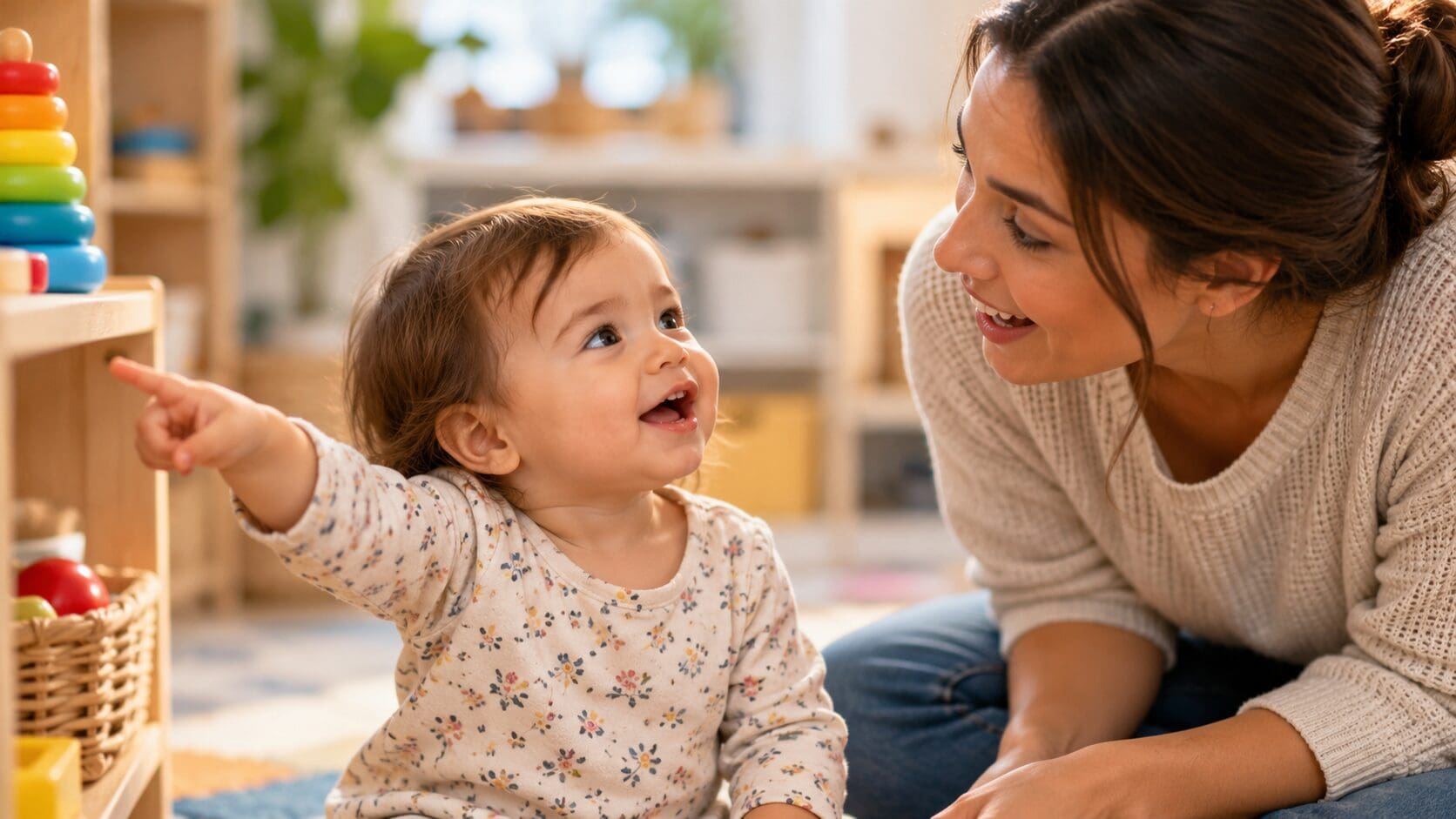
A baby looks toward a favorite toy and then back at you. A toddler points toward something they want. A little hand reaches up to be held. A face lights up when a familiar song begins. A child shakes their head, makes a sound, or uses a sign they know you will understand.
These moments may seem small, but they are part of something important: communication begins long before speech.
When parents, caregivers, and early childhood professionals learn to notice these early messages, they have more opportunities to respond, connect, and show young children that what they communicate matters.
Babies Have Many Ways to Communicate
Spoken words are only one part of communication.
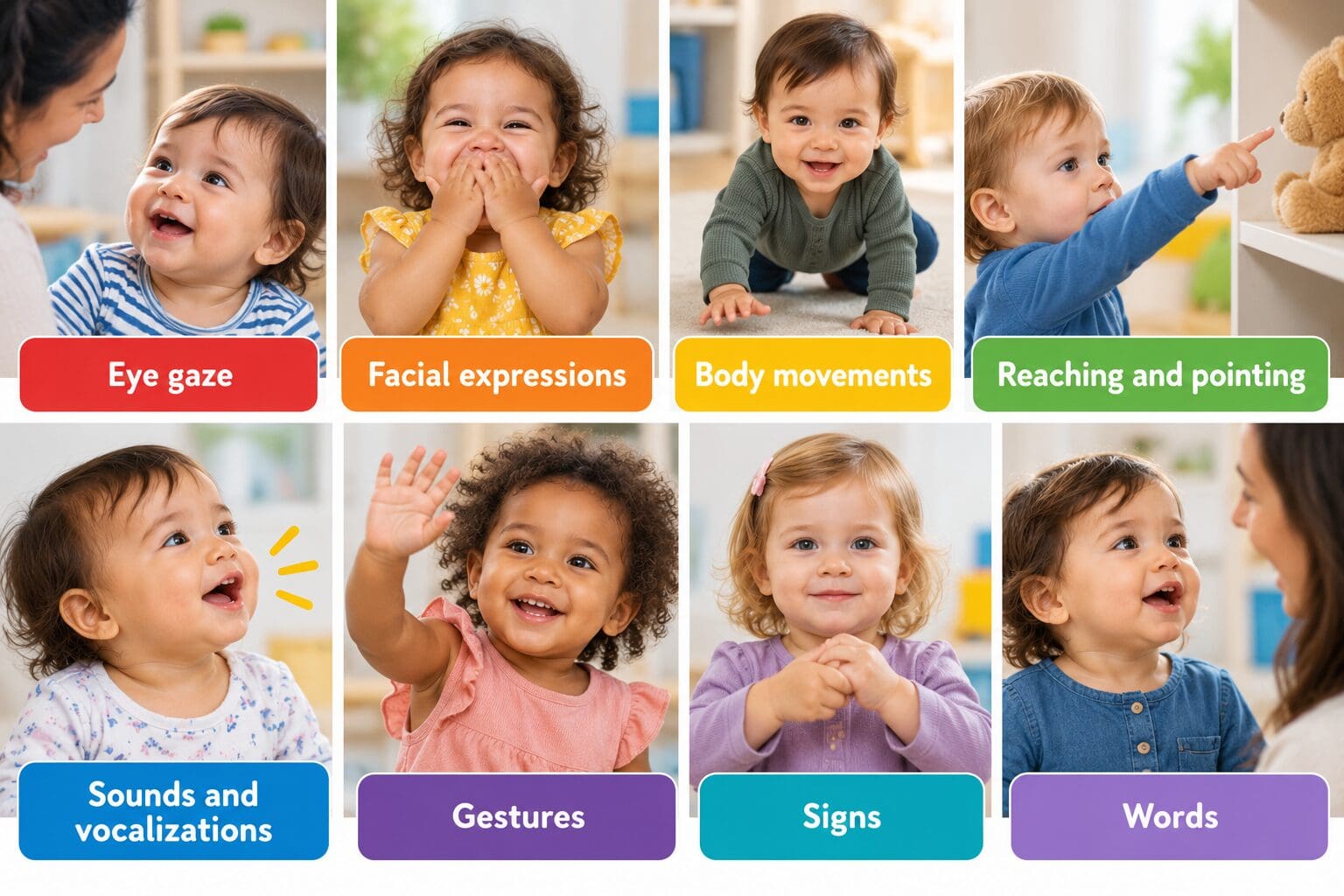
Before speech is fully developed, babies and toddlers may communicate through:
- Eye gaze: Looking toward a person, object, or activity that has their attention
- Facial expressions: Smiling, frowning, widening their eyes, or showing uncertainty
- Body movements: Leaning toward something they want or turning away from something they do not
- Reaching and pointing: Directing an adult’s attention to an object, person, or experience
- Sounds and vocalizations: Using squeals, babbles, grunts, or other sounds to participate in an interaction
- Gestures: Waving, clapping, blowing kisses, raising their arms to be picked up, or creating gestures of their own
- Signs: Using meaningful hand movements to represent objects, actions, needs, or ideas
- Words: Gradually adding spoken language as speech develops
Sometimes several of these happen together.
A baby may point toward a ball, look at a parent, and vocalize all at once. Taken together, those behaviors may communicate a very clear message: “I want you to notice that!”
Look Beyond the Words
It can be easy for adults to focus on milestones such as a baby’s first word or first recognizable sign.
Those milestones are exciting, but they are not the beginning of communication.
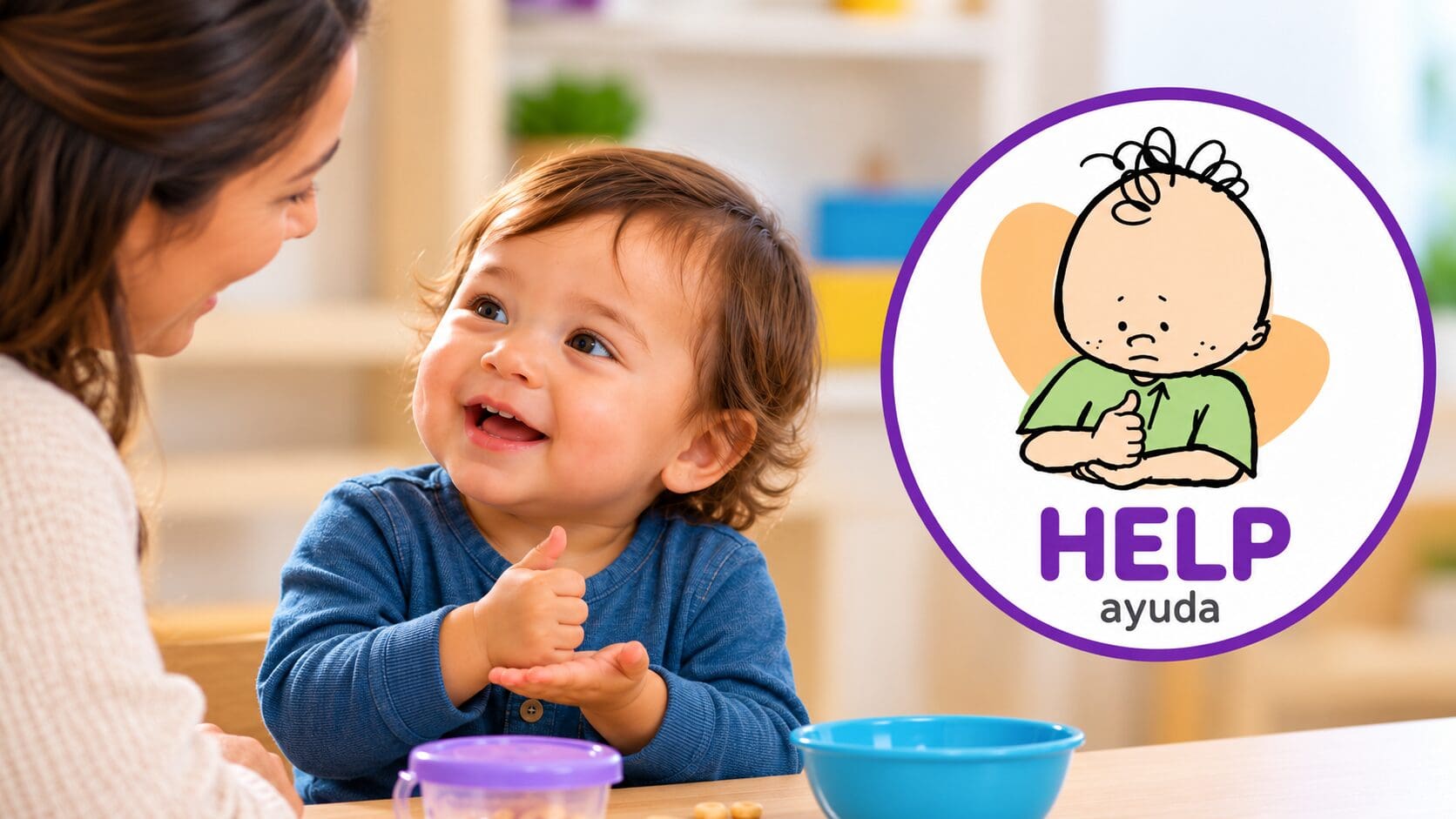
Consider a toddler who reaches toward a closed container and looks at an adult. The adult might respond:
“Do you need HELP?”
By recognizing the child’s message, saying the word, and perhaps modeling the sign for HELP, the adult turns a simple gesture into a back-and-forth communication exchange.
The child learns something powerful:
When I communicate, someone responds.
That experience provides motivation to keep communicating.
Want to learn more about what may already be happening in your baby’s mind? Read What Does Your Baby Know Before They Can Talk?
Pause and Give Babies a Chance to Respond
One simple way adults can support early communication is to slow down.
We often anticipate what babies need so quickly that they have little opportunity to respond.
Try pausing after asking a question or making a comment.
“Do you want MORE?”
Pause.
“Where’s the DOG?”
Pause.
“Are you ALL DONE?”
Pause.
A response might not be a word or even a sign. It could be a look, a smile, a reach, a sound, or a small movement.
When we leave space for babies to participate, we may discover that they have much more to contribute to the conversation than we realized.
Signs Give Babies Another Way to Be Heard
The Baby Signs® Program builds on babies’ natural use of gestures by giving them simple signs they can use while spoken language is still developing.
A baby who cannot yet say “more” may be able to sign MORE.
A toddler who cannot explain that they need assistance may use HELP.
A child who has finished an activity may communicate ALL DONE before they can put that feeling into a sentence.
Adults continue saying the spoken word while making the sign, so signing becomes an additional communication tool rather than a replacement for speech.
And just as early spoken words are rarely perfect, early signs do not have to be perfect either.
If a baby consistently uses a movement to communicate the same idea, adults can recognize the attempt, respond enthusiastically, and continue modeling the sign correctly.
The goal is not perfect handshapes.
The goal is successful communication.
Respond to the Message, Not Just the Method
Imagine that a toddler points toward a shelf where a favorite book is stored.
The child hasn’t said BOOK or made the sign for BOOK.
But the message may still be clear.
Instead of waiting for a particular response, the adult can acknowledge the communication:
“You see your BOOK! Do you want to read?”
Then the adult can say and sign BOOK.
This approach respects what the child is already doing while providing another model for communication.
The same principle applies whether a child communicates through a look, gesture, sound, sign, or word.
First, recognize the message.
Then build on it.
Communication Is About Connection
Recognizing early communication isn’t only about helping children learn vocabulary.
It also helps build responsive relationships.
When an adult notices a baby’s gesture and responds, the interaction becomes a conversation.
When a caregiver recognizes ALL DONE and stops an activity, the child experiences being understood.
When a parent follows a baby’s point and talks about what the baby sees, they share attention and interest.
These little exchanges happen throughout the day during meals, diaper changes, play, books, bath time, walks, and bedtime.
There is no need to turn them into formal lessons.
The opportunities are already there.
This whole-child approach is also explored in More Than Signs: What Makes the Baby Signs® Program Unique.
A Timely Reminder During AAC Awareness Month
October is International AAC Awareness Month, an initiative that raises awareness of augmentative and alternative communication and the many ways people communicate when speech alone does not meet their needs.
The 2026 theme is “AAC in Everyday Life: Today, Tomorrow, and Beyond.”
The Baby Signs® Program for hearing babies is not an AAC system, and it is not a replacement for an individualized communication system recommended by a speech-language professional.
But AAC Awareness Month offers an important reminder that applies much more broadly:
Communication is not limited to speech.
Whether we are interacting with a preverbal baby or a person who communicates in another way, being attentive to how someone communicates is an important part of listening.
Notice. Respond. Connect.
The next time you are with a baby or toddler, watch closely.
Notice where they look.
Watch what they reach for.
Listen to their sounds.
Pay attention to their expressions and body movements.
Notice the gestures and signs they use.
Then respond.
You might be surprised by how much of a conversation is already taking place.
Because long before babies can tell us everything with words, they already have plenty to say.
And when we take the time to notice, we can show them something equally important:
We’re listening.
Keep Exploring Early Communication
Want to learn more about the many ways Baby Signs® supports communication and development?
Read More Than Signs: What Makes the Baby Signs® Program Unique and explore the Baby Signs® Benefits & Research to learn more about the research and developmental principles behind the program.
Explore Baby Signs® Classes and Resources
Want to learn more about using Baby Signs® with your baby, family, or classroom?
Find a Baby Signs® Class | Shop Baby Signs® Resources | Training for Educators & Professionals
