5 Ways to Help Babies Feel Included at Family Gatherings
Family gatherings are wonderful opportunities to connect, celebrate, and create memories. Whether you're enjoying a holiday meal, attending a birthday party, or visiting relatives, these moments bring together the people who matter most.
But for babies and toddlers, family gatherings can sometimes feel overwhelming.
New faces, unfamiliar surroundings, busy conversations, and changes in routines can make it difficult for little ones to communicate what they need or how they're feeling.
The good news? You don't have to wait until your baby can talk to help them participate in family experiences.
Using baby sign language for family gatherings can help little ones express their needs, participate in activities, and connect with the people they love.
The Baby Signs® Program gives babies and toddlers a way to communicate using simple signs before they have the words to express themselves.
Here are five ways to help your baby feel more comfortable, connected, and included at your next family gathering.
1. Baby Sign Language for Family Gatherings: Start with Simple Signs
One of the easiest ways to help babies feel included is to make sure the people around them understand how they communicate.
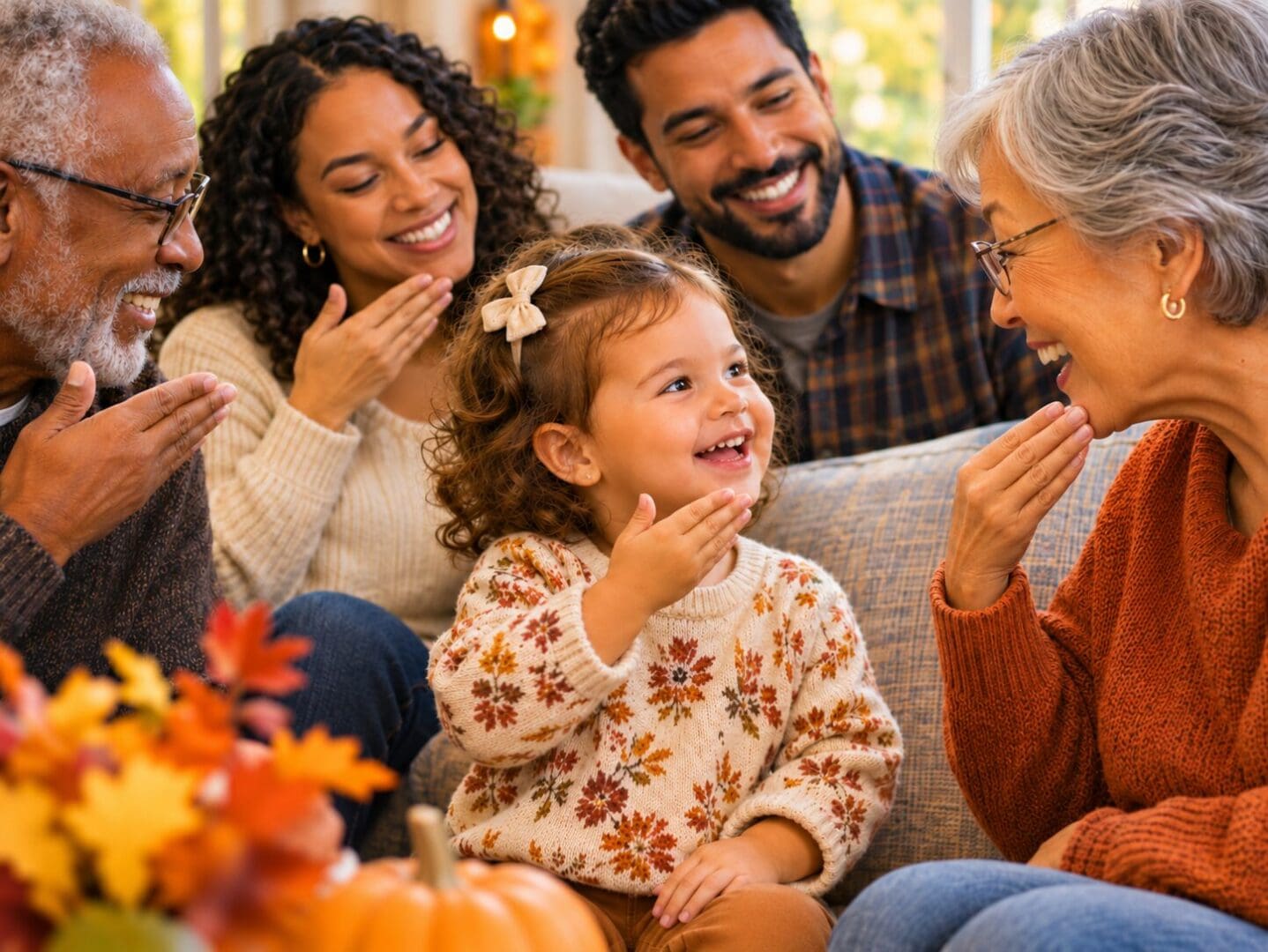
Grandparents, aunts, uncles, cousins, and other relatives may be unfamiliar with baby sign language. Teaching them just a few signs can make a big difference!
Start with signs your baby already knows or sees regularly, such as:
- MORE: To request more of something enjoyable.
- ALL DONE: To communicate that an activity or meal is finished.
- EAT: To talk about mealtimes.
- DRINK: To request something to drink.
- HELP: To ask for assistance.
- BOOK: To invite someone to read together.
- THANK YOU: To express appreciation during everyday interactions.
Imagine Grandma recognizing when her grandchild signs MORE during a favorite game, or an uncle understanding that a toddler signing ALL DONE is ready to leave the table.
These little moments of understanding can create meaningful connections.
Baby Signs® Tip: Before your next gathering, share three or four familiar signs with relatives. Encourage them to say the word while making the sign naturally during everyday interactions.
You might even send family members a short signing video before the gathering so they can practice a few signs ahead of time. When everyone uses familiar signs, your baby has more opportunities to be understood.
For more ideas, read Baby Sign Language for Grandparents: Building Connection Across Generations.
2. Give Your Baby a Way to Communicate When Things Get Busy
Holiday celebrations and family gatherings can be filled with excitement, but all that activity can sometimes be too much for little ones.
Imagine being surrounded by unfamiliar voices, having several people eager to hold you, or trying to rest while everyone is talking and laughing.
Babies may communicate their discomfort through facial expressions, gestures, crying, turning away, or reaching for a familiar caregiver.
As children learn to sign, they may also use familiar signs to express their needs.
Helpful signs during busy gatherings include:
- ALL DONE: When they're ready to stop an activity.
- HELP: When they need assistance.
- HURT: When something is uncomfortable or painful.
- MOMMY or DADDY: When they want a familiar caregiver.
- SLEEP: When they're tired and ready to rest.
Of course, not every baby will use these signs, and adults should never wait for a sign before responding to a child's needs.
Sometimes, the best response is simply finding a quieter space, offering comfort, or giving your little one a break from the excitement.
Baby Signs® Tip: Watch your baby's expressions and body language, even when they're learning to sign. Responding to their communication helps them discover that their feelings and needs matter.
3. Make Family Mealtimes More Interactive
For many families, gathering around the table is one of the highlights of a celebration.
Mealtimes are also wonderful opportunities to use Baby Signs®!
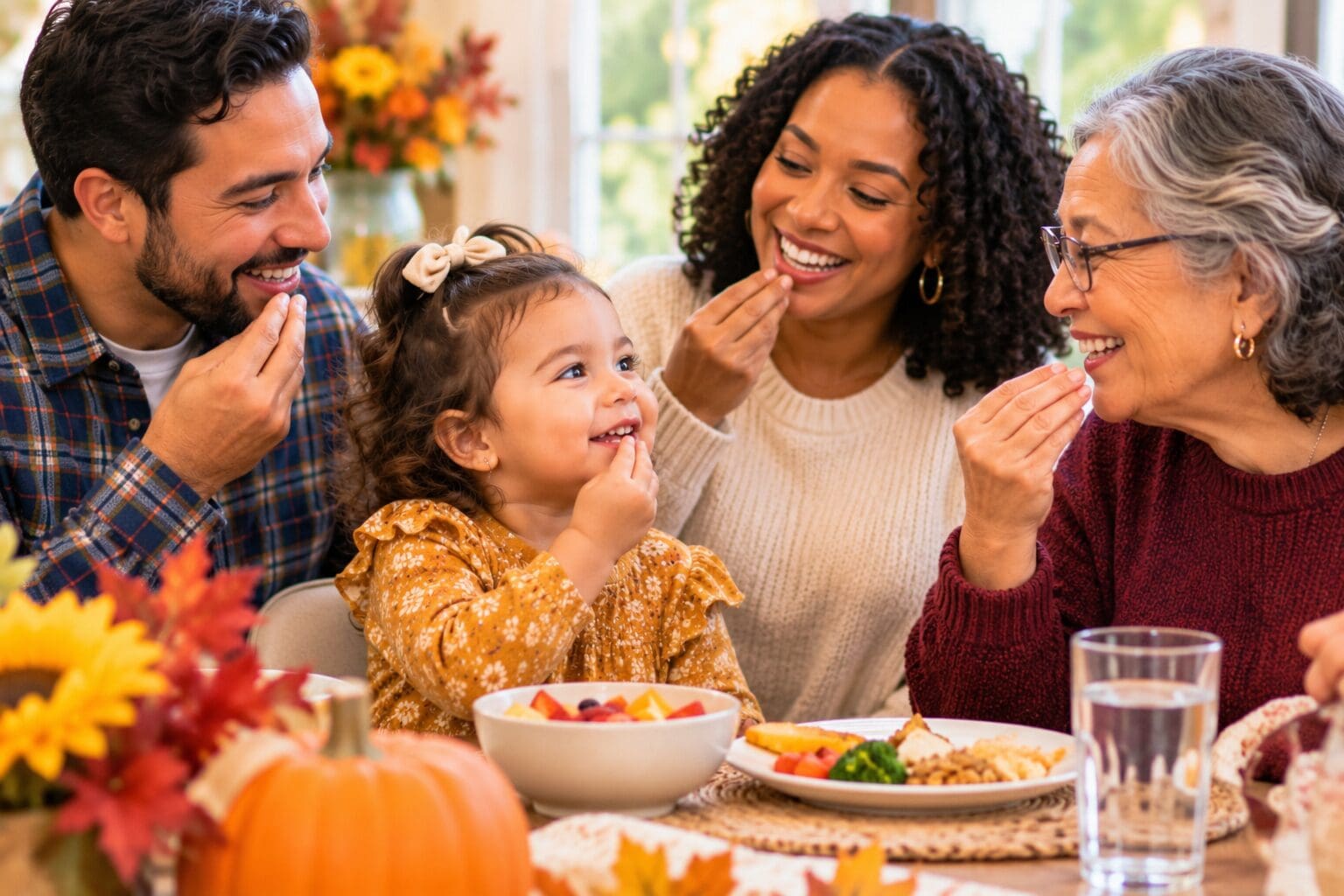
As your baby enjoys familiar, age-appropriate foods or watches family members eating, model simple signs during natural conversations.
Try saying and signing:
- "Would you like MORE?"
- "Are you ALL DONE?"
- "It's time to EAT!"
- "Would you like a DRINK?"
- "Do you need HELP?"
Even if your baby isn't signing back yet, they're learning by watching you.
When your baby does begin using signs, relatives may be delighted to discover that they can understand what your little one is communicating.
Remember to respect your baby's hunger and fullness cues. Signing MORE doesn't always mean a baby wants more food. Sometimes they want more interaction or another turn at an activity.
Baby Signs® Tip: Invite family members to use the same signs consistently. The more opportunities babies have to see signs used meaningfully, the more familiar those signs can become.
Explore more ideas in More Than MILK: How Signs Support Communication During Feeding.
4. Create Opportunities for Connection Through Play
Babies don't need to participate in grown-up conversations to be part
of the fun.
Simple interactions can help little ones connect with family members in ways that feel natural and enjoyable.
Here are a few ideas:
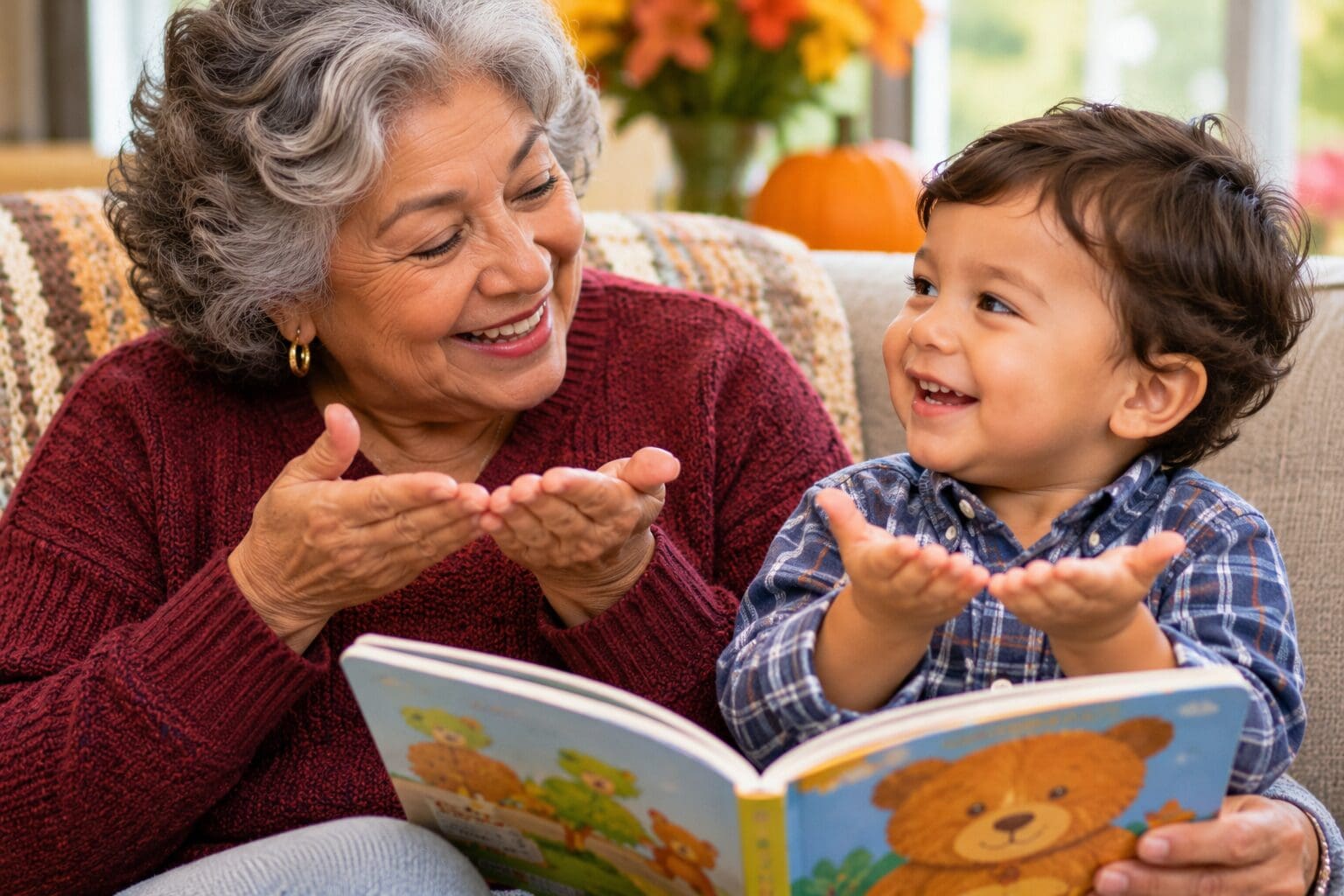
Read a favorite book together.
Invite a grandparent or older cousin to read with your baby. Add familiar signs such as BOOK, DOG, CAT, or MORE as you point to pictures.

Sing songs with signs.
Choose a familiar song and invite relatives to join in. Repeating favorite songs and signs can make the activity fun for everyone.
Play a simple game.
Peekaboo, rolling a ball, or playing with age-appropriate toys offers wonderful opportunities to model MORE, PLAY, and ALL DONE.
Practice saying THANK YOU together.
When someone shares a toy, gives a gift, or does something kind, model the sign for THANK YOU while saying the words. Family members can join in, creating a shared moment of appreciation without expecting your baby to copy the sign.
Want to learn the sign? Watch our Baby Signs® THANK YOU video and practice together as a family!
Follow your baby's interests.
If your little one notices a family pet, points to a colorful decoration, or becomes interested in a favorite toy, use the moment to talk and sign about what has captured their attention.
Baby Signs® Tip: Keep activities short and child-led. The goal isn't to get your baby to demonstrate every sign they know. It's to enjoy meaningful moments together.
5. Let Your Baby Communicate in Their Own Way
Family members often love seeing what babies and toddlers have learned.
Someone might excitedly ask, "Can you show us the sign for MORE?" or "Show Grandpa how you sign MILK!"
While these requests are usually well-intentioned, babies don't always want to perform on demand.
And that's perfectly okay.
Family gatherings are also opportunities to respect your little one's comfort and boundaries. If your baby turns away from a relative, reaches for you, or doesn't want to give someone a hug or kiss, honor those signals. Helping children feel included means allowing them to participate in ways that feel comfortable and safe.
A child might use a sign spontaneously during play but choose not to repeat it when asked. They may communicate through gestures, facial expressions, sounds, words, or a combination of these.
Communication is about connection, not performance.
Instead of asking your baby to demonstrate signs for an audience, encourage relatives to use signs naturally.
For example, rather than saying, "Show everyone how you sign MORE," a family member might pause during a favorite game and ask, "Would you like MORE?"
This creates an authentic opportunity for communication without pressure.
Baby Signs® Tip: Celebrate all your baby's attempts to communicate, whether they use a sign, gesture, sound, or word. Every meaningful interaction is an opportunity to build understanding.
Learn more about the many ways babies express themselves in How Babies Communicate Without Words.
The Most Meaningful Family Moments Begin with Connection
Family gatherings don't have to be perfect to be meaningful.
Sometimes the sweetest memories come from the smallest interactions: a grandparent recognizing a baby's sign, a toddler communicating that they're ALL DONE, or a family member sharing a favorite book with a little one.
The Baby Signs® Program helps make these moments possible by giving babies and toddlers additional ways to express themselves before they can talk.
And when family members learn to recognize and respond to those early messages, everyone has another opportunity to connect.
This season, remember that helping your baby feel included isn't about teaching more signs. It's about making sure their communication is noticed, understood, and valued.
Bring the Gift of Communication to Your Family
Want to help grandparents, caregivers, and other family members learn the signs your baby uses?
The Baby Signs® Quick Reference Guide features 67 illustrated signs and helpful tips for using them in everyday routines. It's an easy way to help everyone feel more confident signing with your little one.
Explore the Baby Signs® Quick Reference Guide
Discover more ways to help your baby communicate before they can talk at BabySigns.com.
Simple signs. Powerful communication.
