Giving Babies a Voice for Safety: Essential Signs Every Family Should Know
Updated August 27, 2026
Celebrating Baby Safety Month with the Baby Signs® Program
Keeping babies and toddlers safe is always a priority for parents and caregivers. September is Baby Safety Month, an annual reminder to review the everyday practices that help protect our youngest family members.
From creating a safe sleep environment and securing furniture to practicing car seat and water safety, protecting little ones requires thoughtful preparation and close supervision.
Communication can be part of that safety toolkit, too.
Babies may not yet be able to explain what they need, what hurts, or what makes them uncomfortable, but they are already communicating. By pairing simple signs with spoken words, the Baby Signs® Program gives babies and toddlers another way to express themselves before they can talk clearly.
Everyday Safety Signs to Teach
Some signs are especially useful when talking about safety, comfort, and everyday boundaries.
HELP
HELP gives babies and toddlers a way to ask for assistance. A toy may be stuck, something may be out of reach, or they may simply need an adult’s attention. Modeling HELP during these everyday moments teaches children that they can turn to a trusted adult when they need assistance.
HURT
When a baby cries, caregivers often have to determine what is wrong. The sign for HURT can give an older baby or toddler another way to communicate pain or discomfort.
Model the sign during familiar experiences:
“Your knee HURTS.”
“Does your mouth HURT?”
A sign cannot tell you why something hurts or how serious it is, but it may provide another clue about what your child is trying to communicate.
HOT
Pair the word HOT with the sign when talking about things such as the stove, warm food, or a hot drink.
“That’s HOT.”
Using the sign makes the warning visual as well as verbal. Of course, young children should never be expected to recognize hazards on their own. Close supervision and keeping hot items safely out of reach remain essential.
STOP and WAIT
STOP and WAIT are useful signs as toddlers become increasingly mobile and independent.
Use STOP when a child approaches something unsafe or play becomes too rough. WAIT can be incorporated into everyday routines such as getting into the car, preparing to cross a street, or waiting for an adult before beginning an activity.
The signs reinforce an adult’s spoken direction, but they do not replace supervision or physical safety measures.
ALL DONE
ALL DONE is useful for more than mealtimes. A toddler may use it to indicate that they want an activity or interaction to end.
Adults will not always be able to honor the request immediately, especially during necessary safety routines, but acknowledging the child’s communication is still important.
“I know you’re ALL DONE, but we need to buckle your car seat so you can ride safely.”
AFRAID
Safety also includes helping young children communicate their feelings.
Model AFRAID when something frightens your child:
“That loud noise scared you. You felt AFRAID.”
Giving children a way to communicate fear or discomfort helps them learn that the adults they trust will listen and respond.
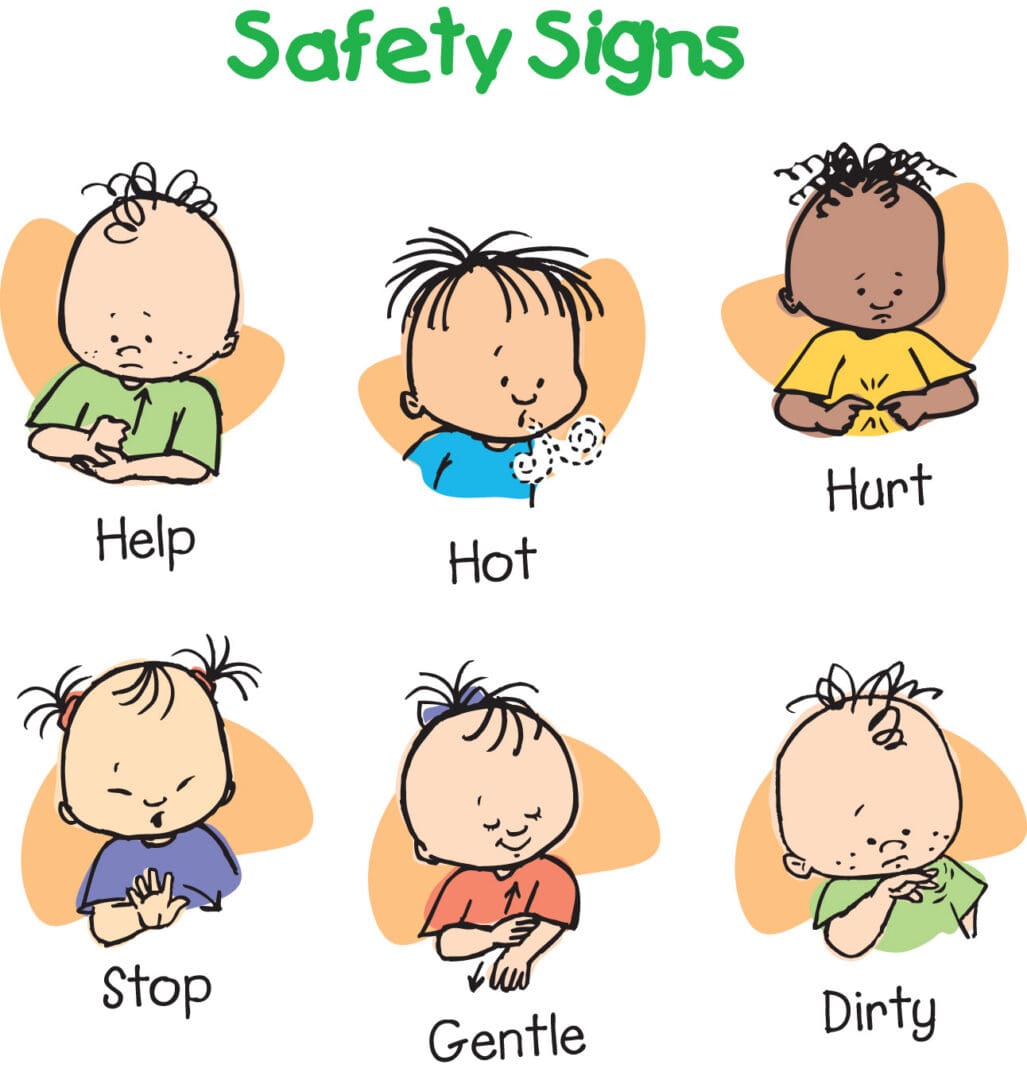
Other useful signs include DIRTY, GENTLE, LISTEN, QUIET, SIT DOWN, UP/DOWN, and WASH.
Make Safety Signs Part of Everyday Life
The best time to teach safety-related signs is not necessarily during a stressful moment.
Introduce them during calm, familiar routines:
- Use HOT while cooking.
- Practice STOP and GO with toy cars.
- Use WAIT during a song or game.
- Model HELP when your baby needs assistance.
- Practice GENTLE while petting an animal or stuffed toy.
- Use WASH during handwashing.
- Talk about AFRAID while reading a book about feelings.
Babies learn through repetition and meaningful experiences. The more naturally you use a sign during everyday life, the more opportunities your child has to understand its meaning.
Keep Signs Consistent Across Caregivers
Parents, grandparents, nannies, child care providers, and other trusted caregivers can all reinforce the same signs.
If your baby already uses HELP, HURT, STOP, WAIT, or another safety-related sign, let other caregivers know what the sign looks like, including your child’s own version of it.
Consistency helps increase the chances that a baby’s communication attempt will be recognized wherever they are.
Make Safety Learning Fun
Safety vocabulary does not need to feel scary or serious to a young child.
Songs, games, books, and visual reminders can make these concepts fun and memorable.
🎵 Try the “I Know What To Do” song from the If You’re Happy & You Know It album.
🎓 Explore the MORE Sign, Say & Play™ Safety Class for additional safety-related signs and activities.
🖼️ Display the Baby Signs® Safety Signs Poster Pack at home, in a classroom, or in a child care setting to help adults remember to use important signs consistently.
Looking for more ideas? Read our related article, Baby Safety Awareness with Signs, for additional ways to use signs such as HOT, STOP, WAIT, GENTLE, WASH, and HURT during everyday routines.

Signs Are One Part of the Safety Toolkit
Baby Signs® can strengthen communication, but babies and toddlers should never be responsible for keeping themselves safe.
Signs do not replace childproofing, safe sleep practices, appropriate car seats, water supervision, safe product use, or an attentive adult.
What signs can do is give babies another way to participate in communication.
HELP can say, “I need you.”
HURT can communicate, “Something doesn’t feel right.”
ALL DONE can mean, “I want this to stop.”
AFRAID can help a child express, “This scares me.”
And signs such as HOT, STOP, WAIT, and GENTLE can make important messages more visible.
Every successful exchange teaches babies something powerful:
When I communicate, the people who care for me listen.
This Baby Safety Month, consider adding a few meaningful safety signs to your family’s everyday routines. Small moments of communication can help babies feel heard, understood, and connected to the adults who keep them safe.
Get Ready for Baby Safety Month
September is Baby Safety Month, an annual opportunity for families and caregivers to review the everyday steps that help protect babies and young children. The Baby Safety Alliance encourages families to focus on awareness, behavior, and caution when choosing and using products for babies.
This year, add communication to your family's safety conversation.
Start with a few meaningful signs, use them consistently alongside spoken words, and help your baby discover another way to tell you what they need.
Baby Safety Resources
For additional information about keeping babies and toddlers safe, visit resources from the Baby Safety Alliance, Safe Kids Worldwide, and the U.S. Consumer Product Safety Commission.
